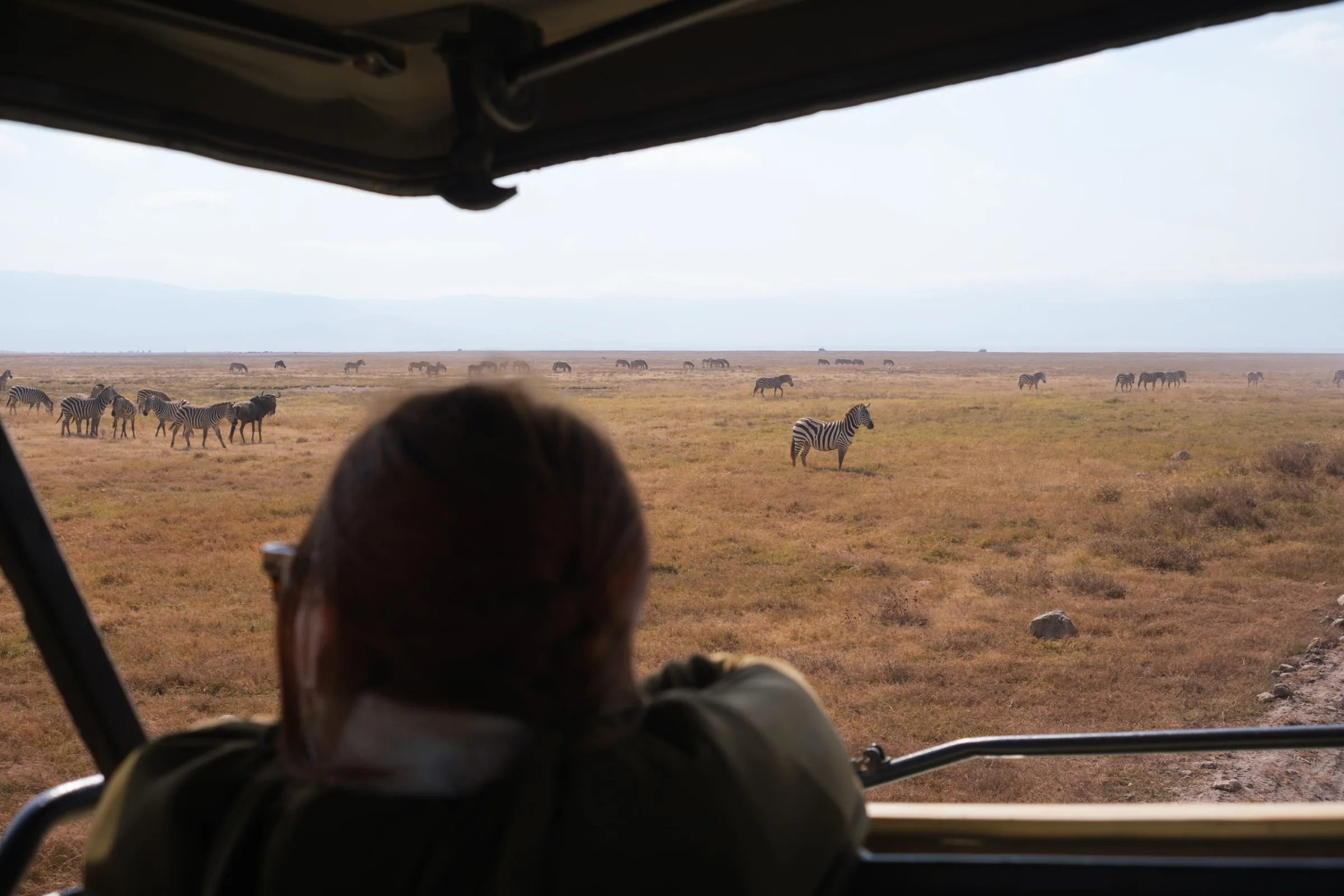
Safari in Tanzania: 3 days in the heart of the wild
Watching wild animals in their natural environment, crossing the great African plains and discovering landscapes we had only ever seen in documentaries… A safari in Tanzania was one of those trips we wanted to experience at least once.
In August 2025, the two of us set off for three days of safari in northern Tanzania, to discover three sites: Tarangire National Park, Lake Manyara National Park and the impressive Ngorongoro Crater.
Three stops, three very different environments, and a few animal encounters we won’t forget any time soon.
Not everything went to plan, far from it. Between flight delays, surprises on the ground and some disappointments with the organisation, this trip also helped us understand what we would do differently today.
In this article, we share our experience, our photographs and our tips for planning your own safari in Tanzania.
For this first safari, we had chosen to book through Tourlane, which had relied on the local agency Leopard Tours to organise our tour. An experience that allowed us to discover three parks in three days, but that also made us rethink the way we organise this kind of trip.
An eventful arrival in Tanzania
Our trip began with Kenya Airways, departing from Paris, with a stopover in Nairobi before reaching Zanzibar, where we were due to catch a connecting flight to the mainland.
Unfortunately, the trip soon fell behind schedule.
Our experience with Kenya Airways was not a good one: between the delay and the comfort of the planes, we were already disappointed before even reaching our destination. But the biggest problem was yet to come: we missed our domestic connection.
We had to find a solution on the spot and buy new tickets to reach Arusha, the starting point of our safari.
The result: half a day lost from a programme that only had three.
And the surprises didn’t stop there. Our guide then took a wrong turn, adding about an hour of driving before our first visit.
Suffice to say that our first steps in the savannah were not exactly what we had imagined.
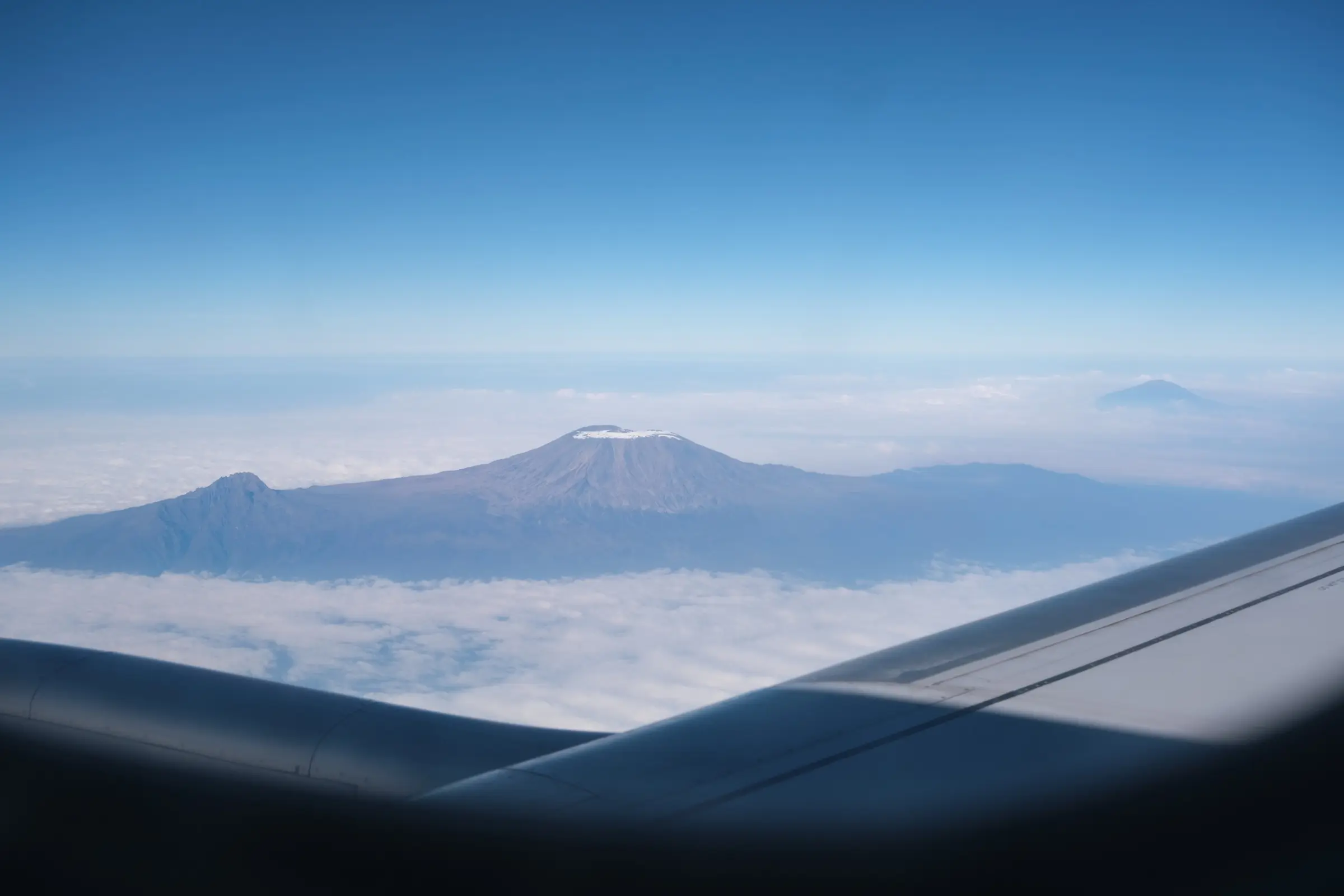
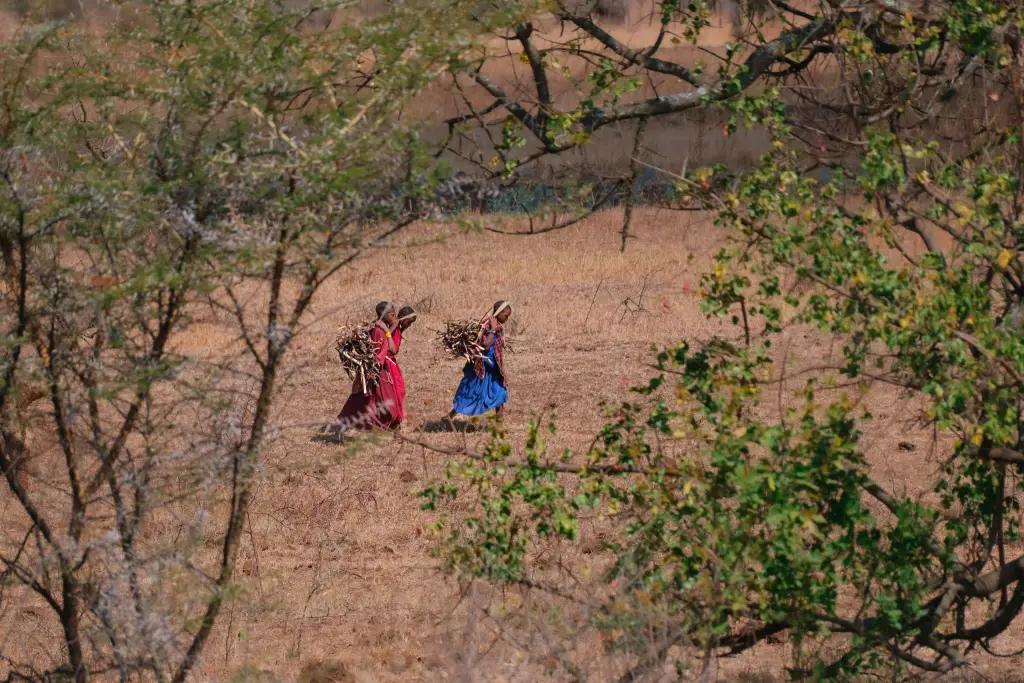
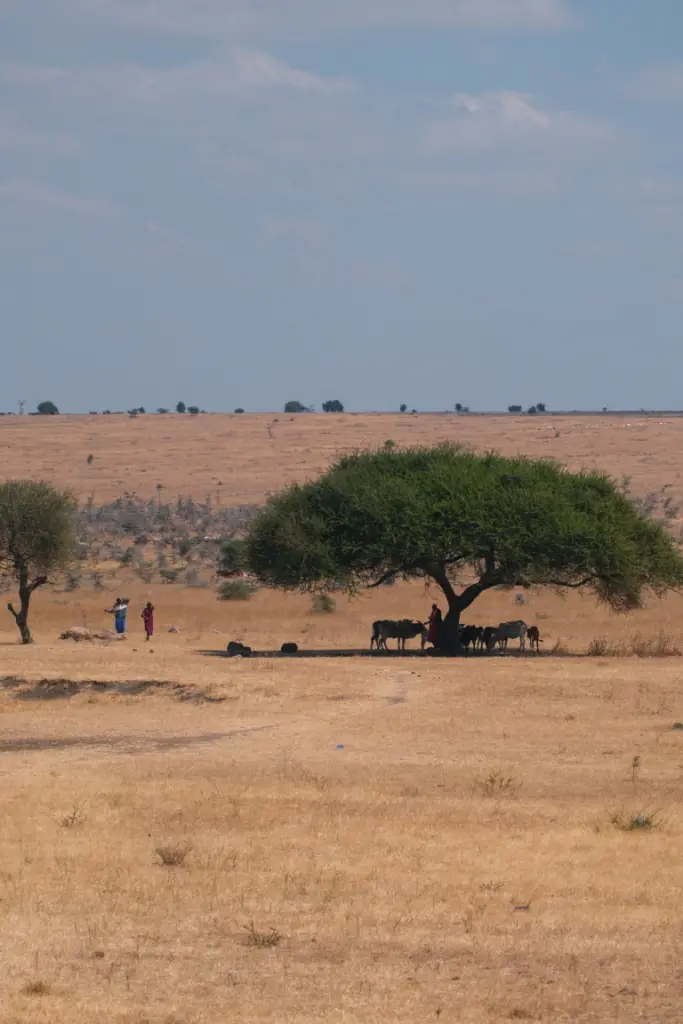
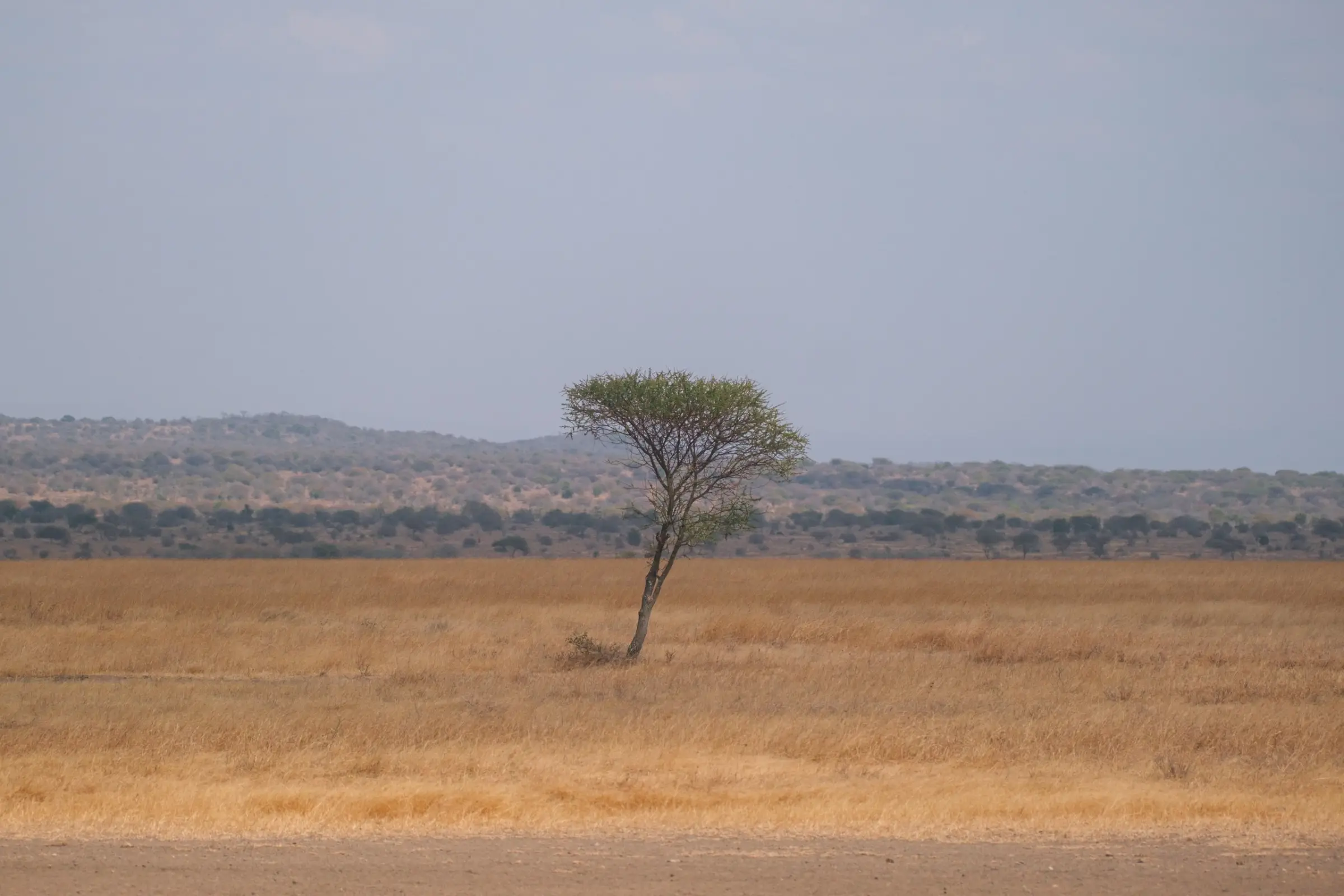
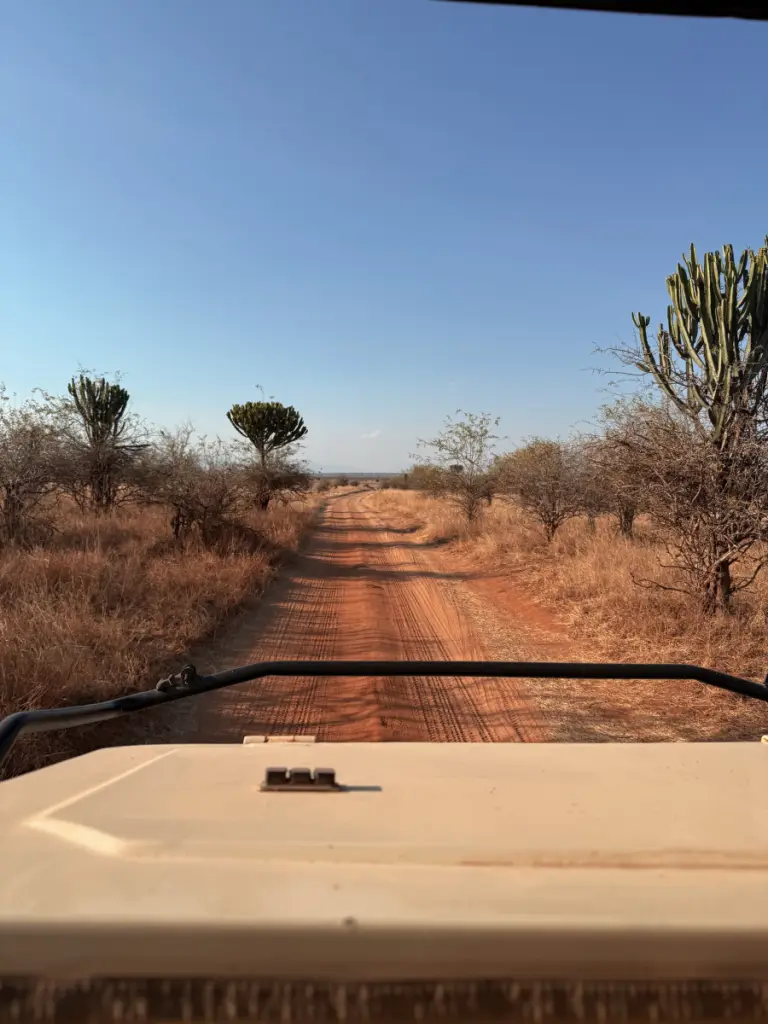
On the road to Tarangire
Swipe →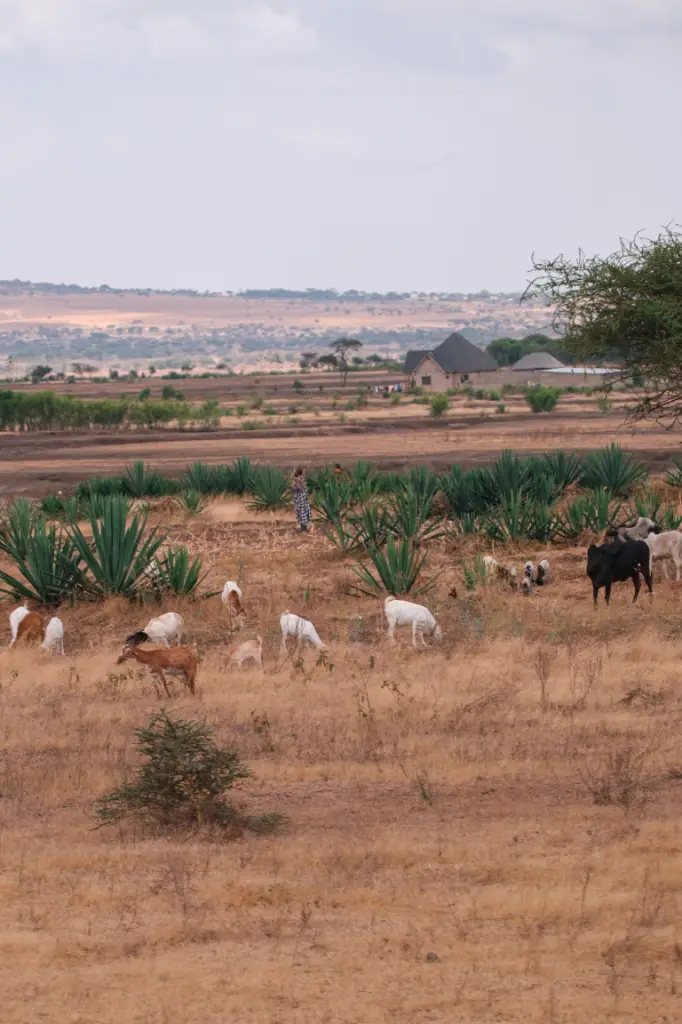
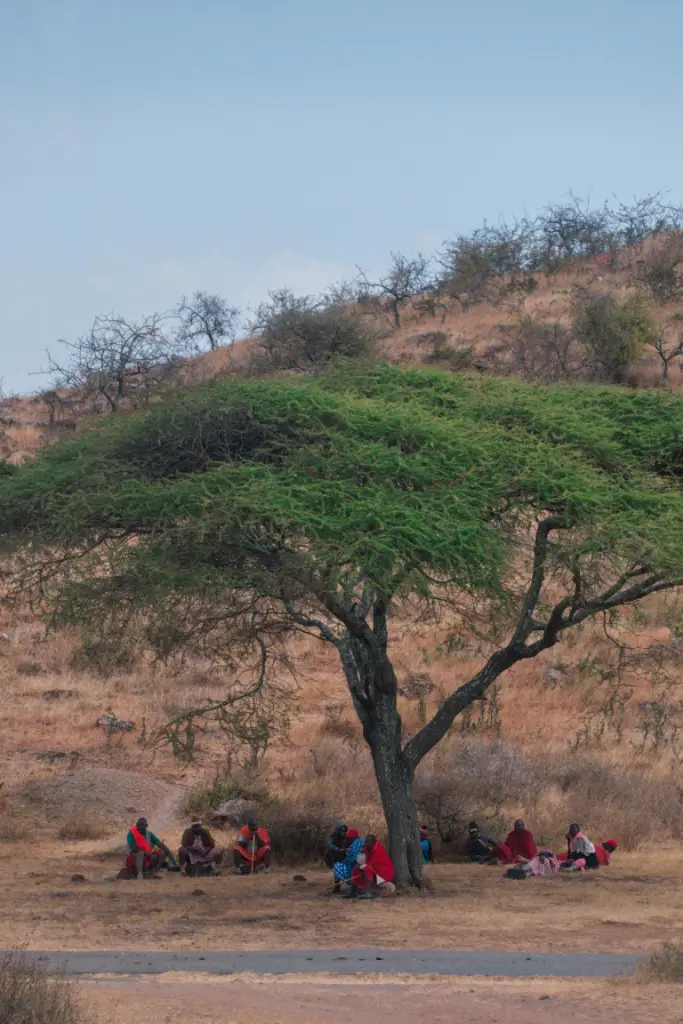
Day 1 — Tarangire: a first safari at sunset
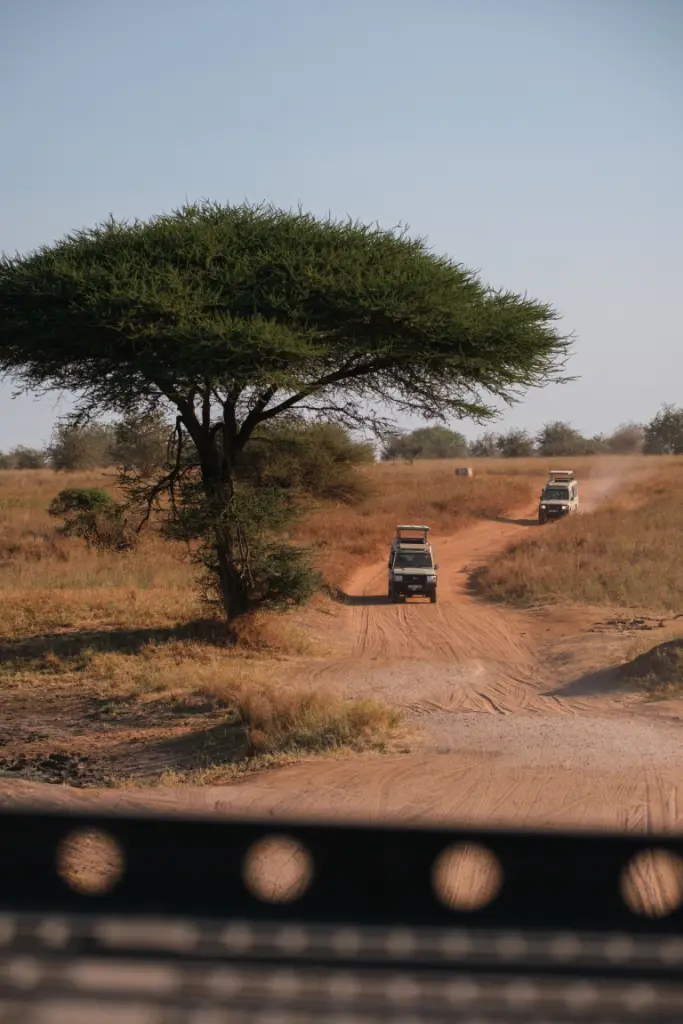
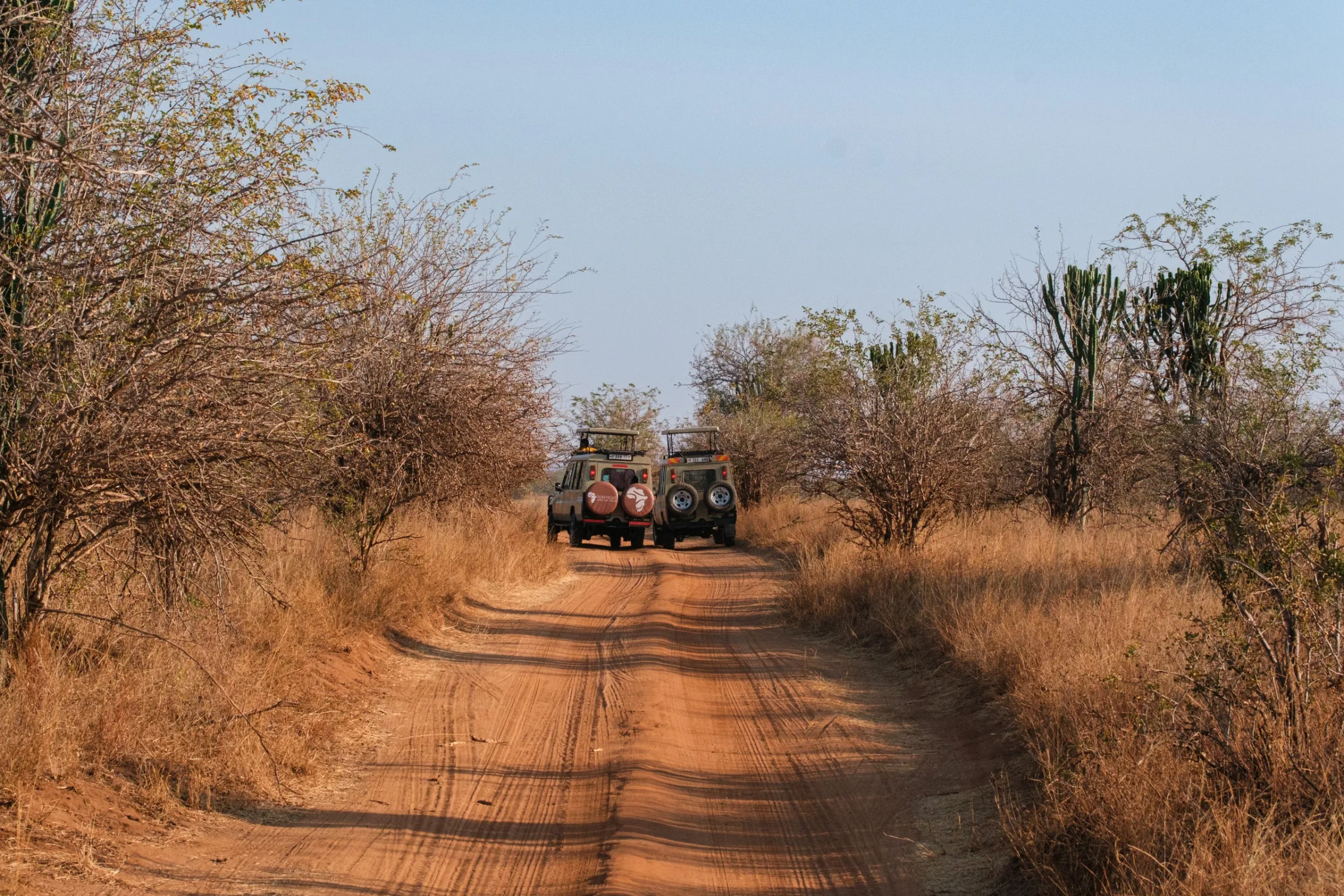
When we finally reach Tarangire National Park, it is almost 5 pm. The safari vehicles are already heading for the exit.
Our guide nevertheless manages to get special permission for a late visit. We then have about two hours to discover the park, far less than originally planned.
And yet, this first evening will remain one of our most beautiful memories of Tanzania.
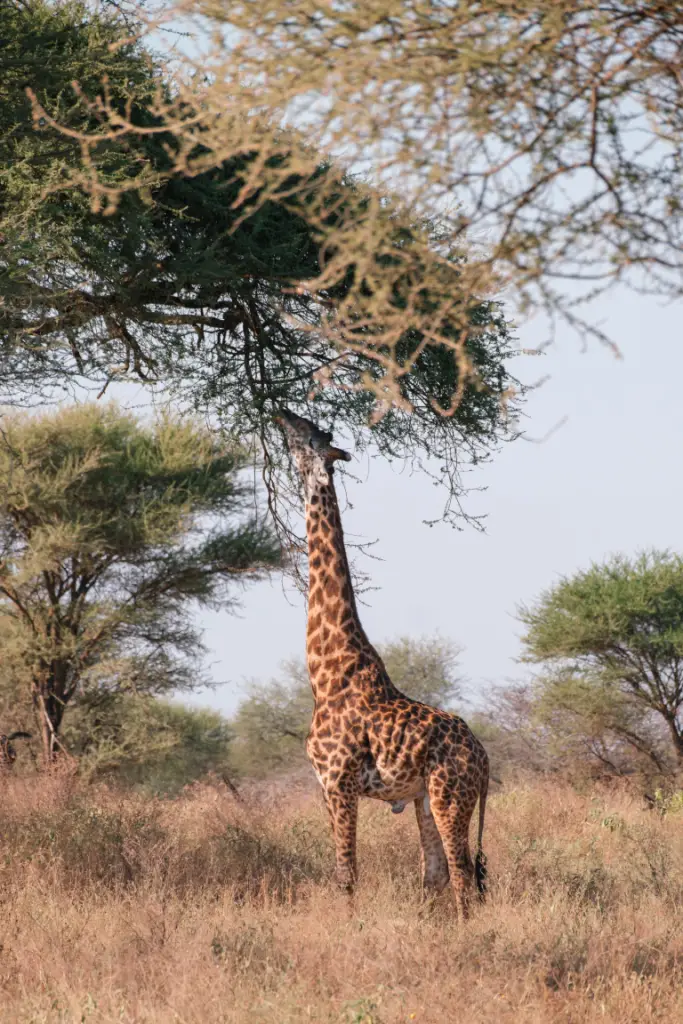
We have barely entered the park when we come across a giraffe. The first of our safari.
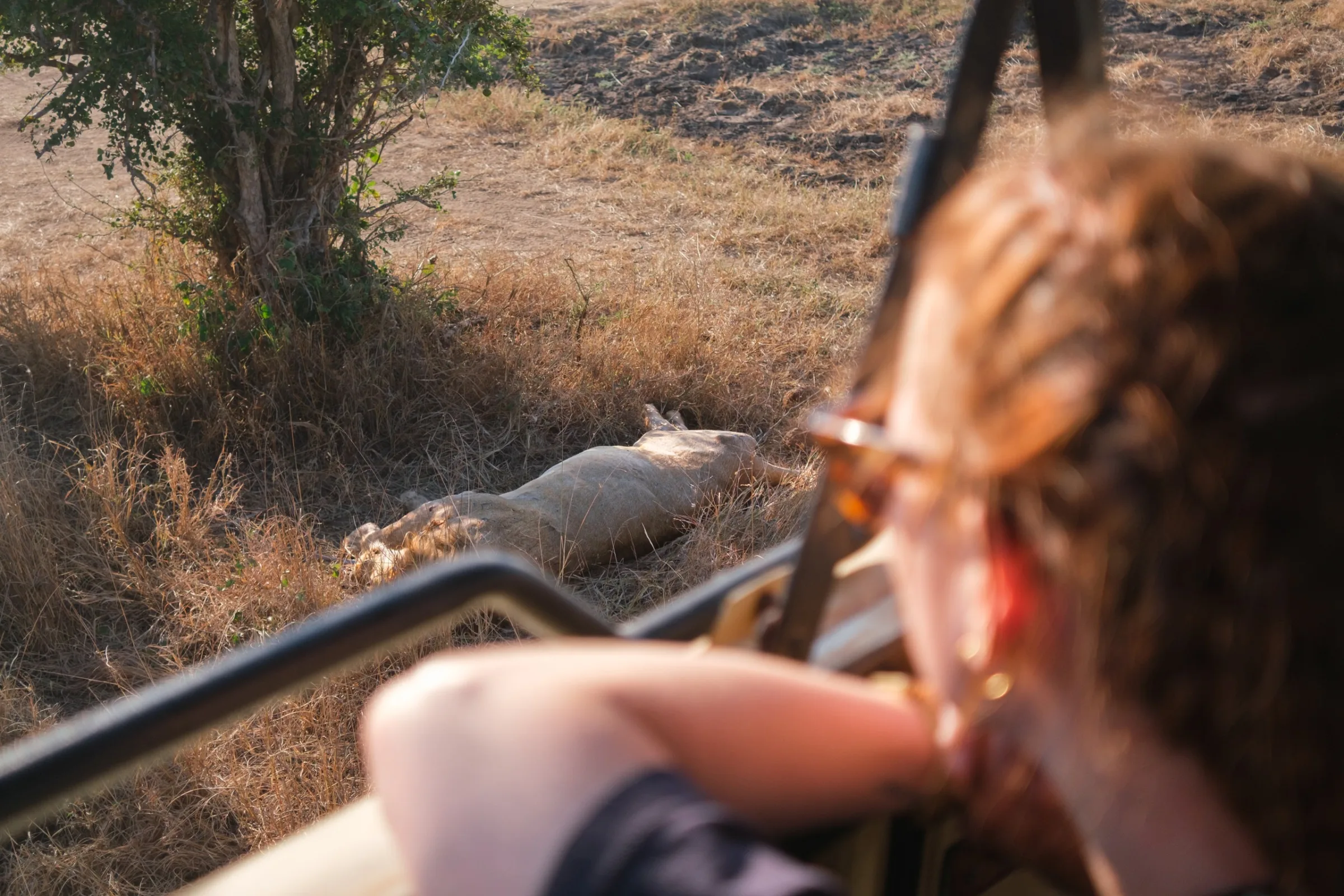
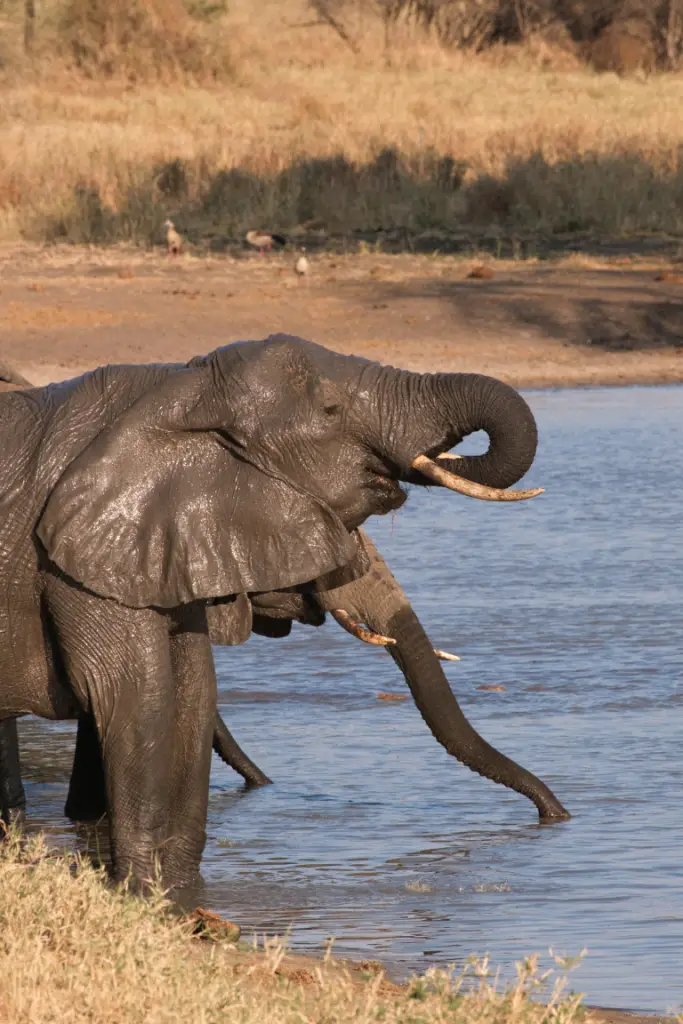
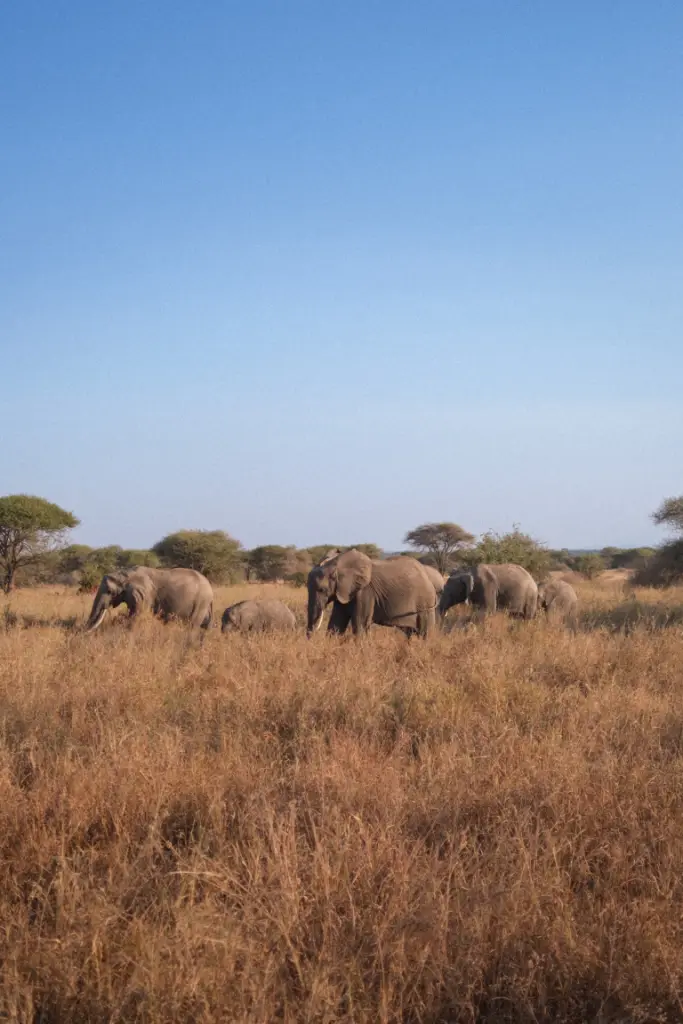
Then the sightings follow one after another: elephants, antelopes, a lion lying peacefully and other animals we discover along the tracks.
Everything moves quite fast. We have little time ahead of us, but we are completely absorbed by what is happening around us.
Lionesses in the trees, almost alone in the park
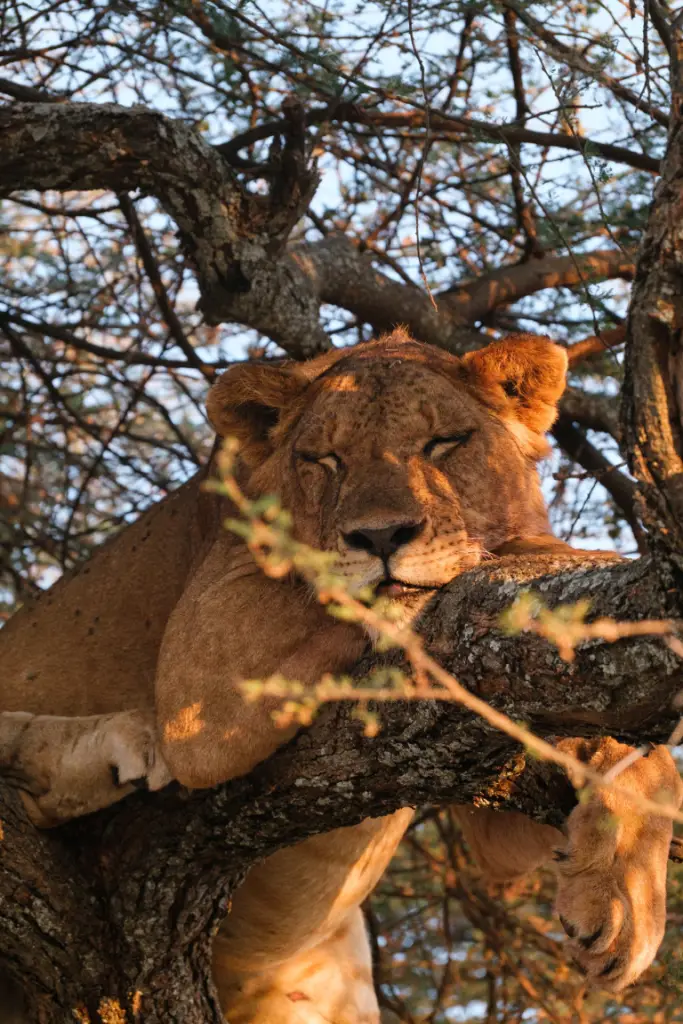
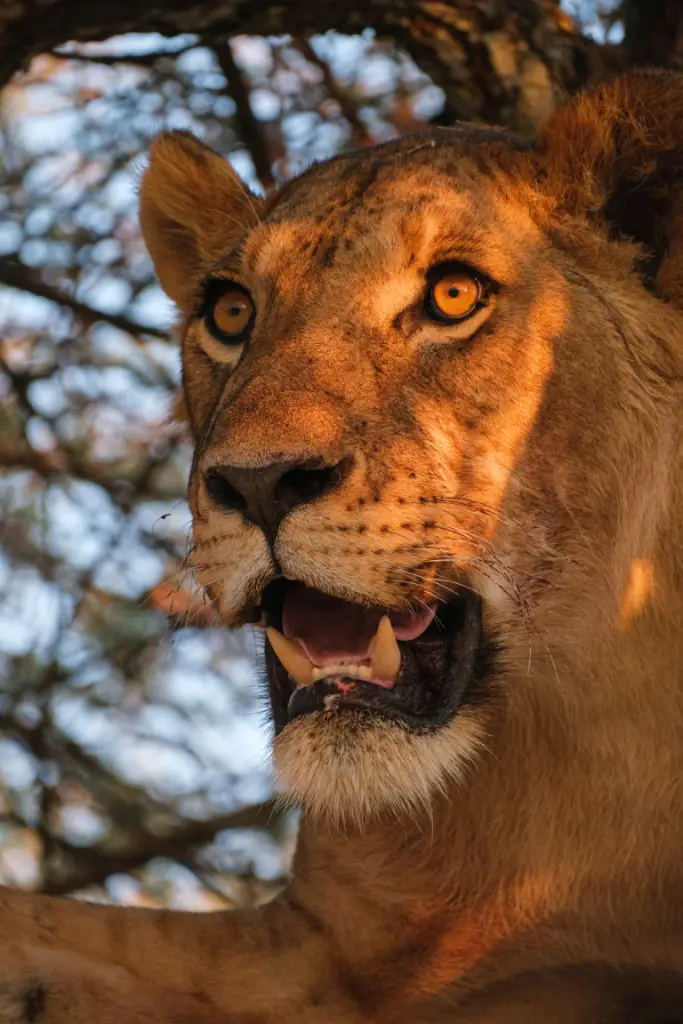
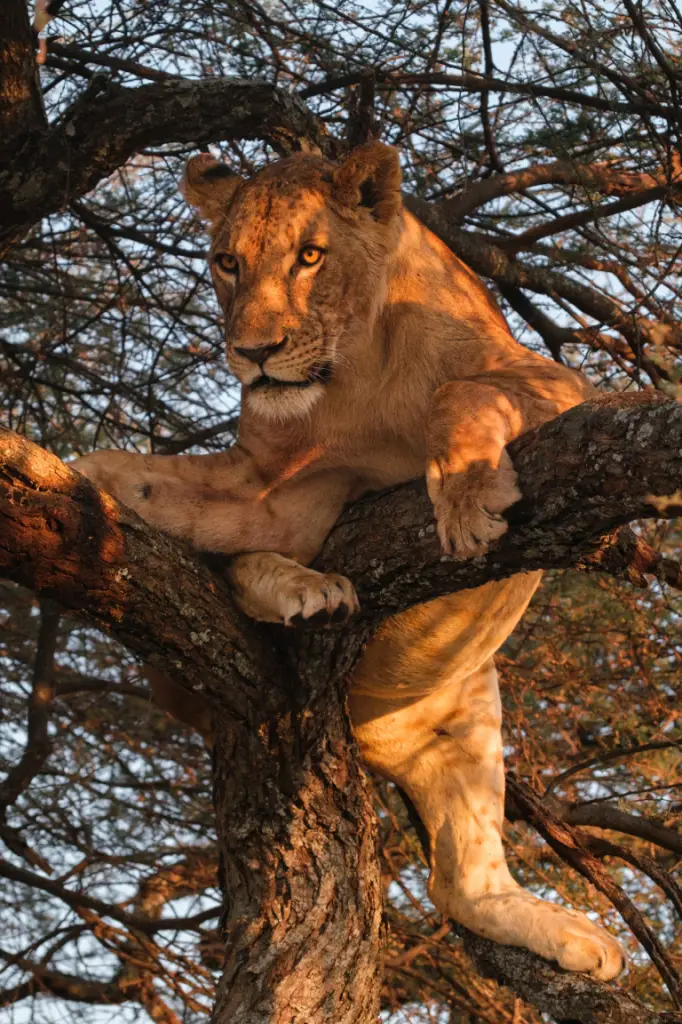
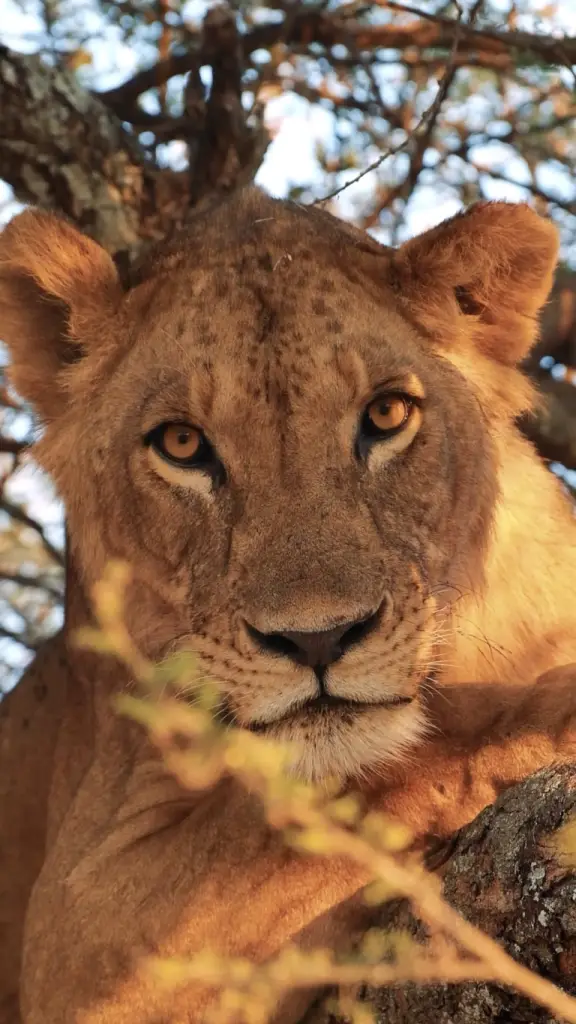
The most striking moment comes when we spot lionesses resting in the trees.
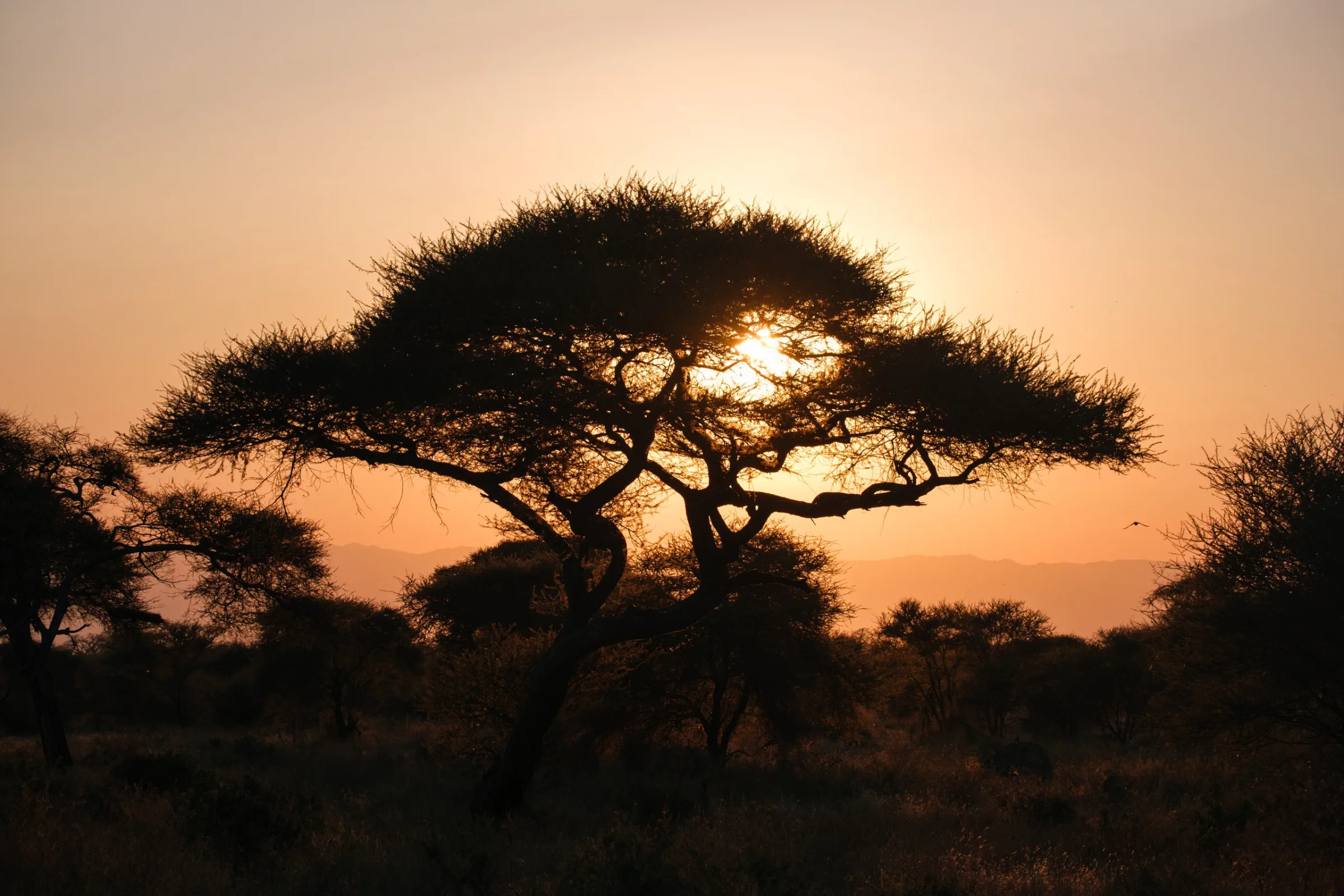
The light begins to fade, the sun sinks over the savannah and the colours become magnificent. Around us, there are almost no vehicles left.
We take the time to watch them in a surprisingly calm atmosphere, far from the bustle we expected to find in such a touristy park.
That is probably what made this moment so special: we were seeing the animals for the first time, in superb light, with the feeling of having part of the park almost to ourselves.
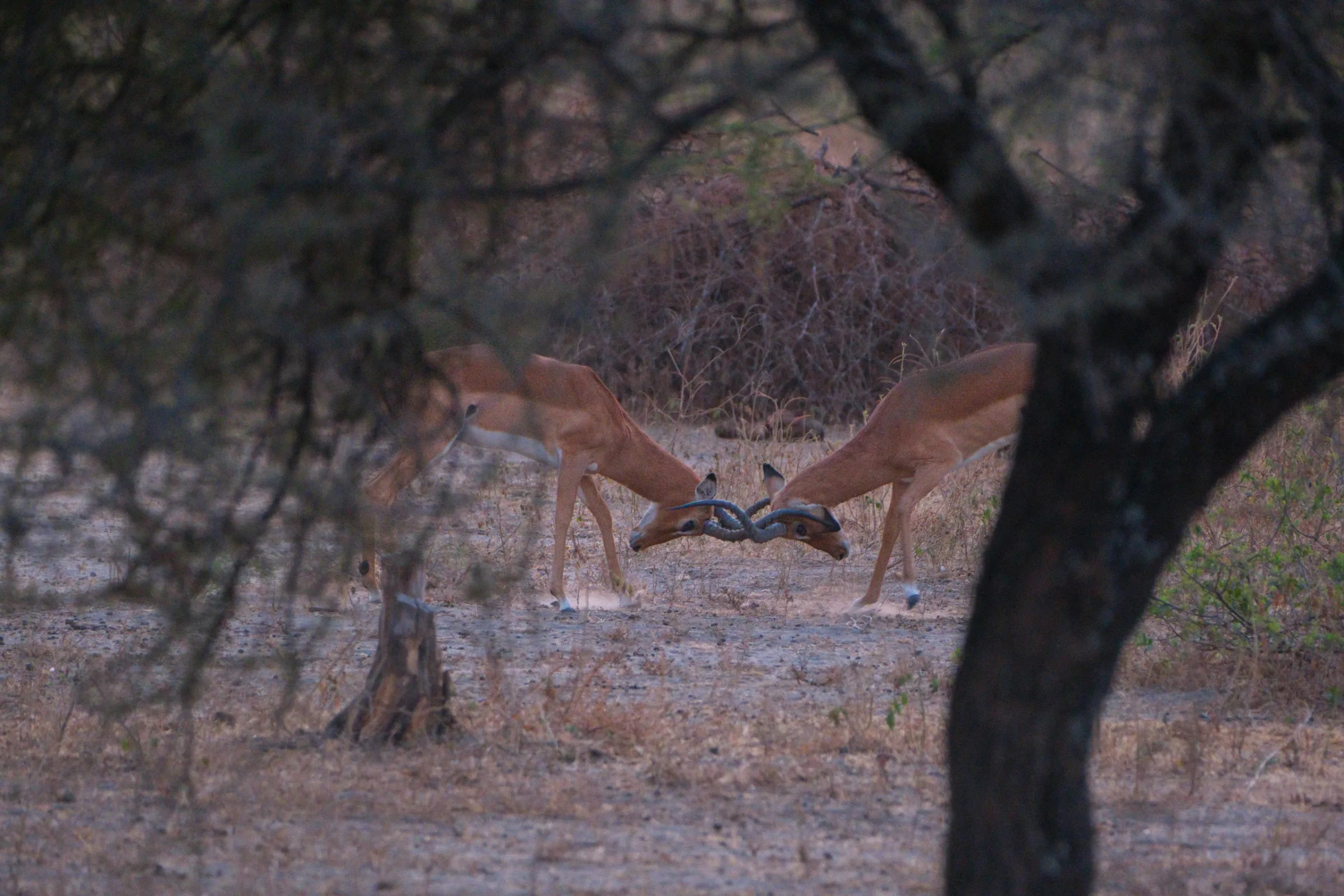
We also witnessed a clash between two male antelopes, horns locked together, a scene as brief as it was impressive.
By the time we left, we had completely forgotten the day’s setbacks.
Why visit Tarangire National Park?
Tarangire is known in particular for its baobabs, its large elephant populations and the river that gives it its name.
During the dry season, this river is an important watering hole for wildlife, drawing many animals into the park.
That is also what makes a safari special: sightings are never guaranteed. You can drive several kilometres without seeing much, then witness an exceptional scene within a few minutes.
We only spent a very limited time in Tarangire, but enough to understand why this park is so popular.
And in the end, our late arrival gave us something we might not have experienced otherwise: a safari at sunset, with almost no one around.
Day 2 — Lake Manyara: elephants and monkeys in the heart of the forest
The next day, a complete change of atmosphere.
After the more open landscapes of Tarangire, we discover Lake Manyara National Park, much greener in the areas we drive through.
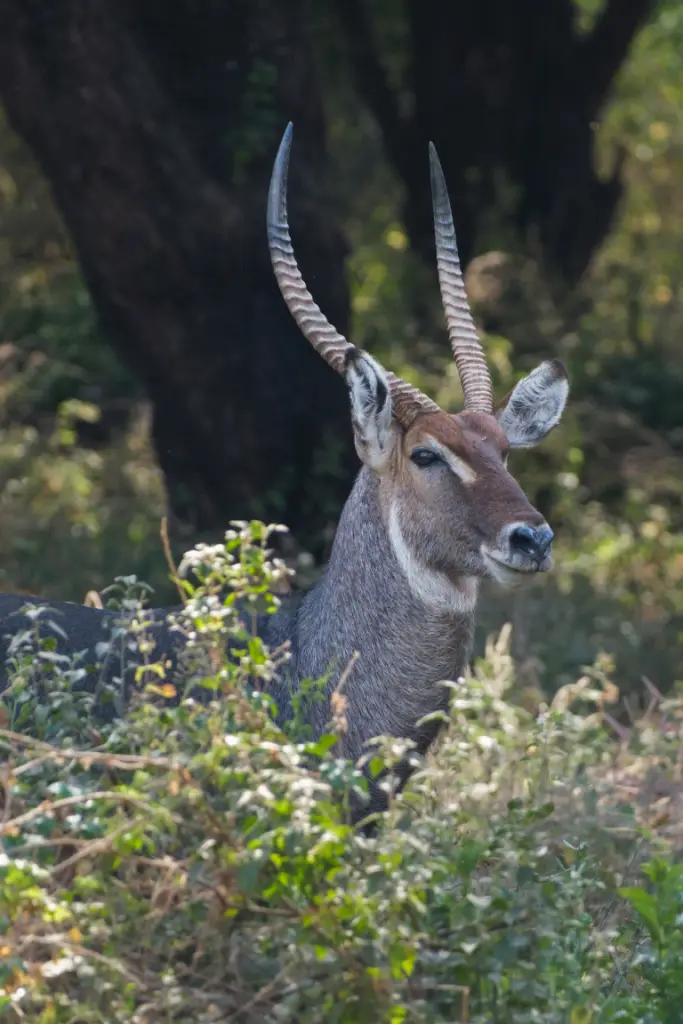
Here, the tracks wind between the trees and the vegetation is sometimes so dense that you have to look carefully to make out the animals.
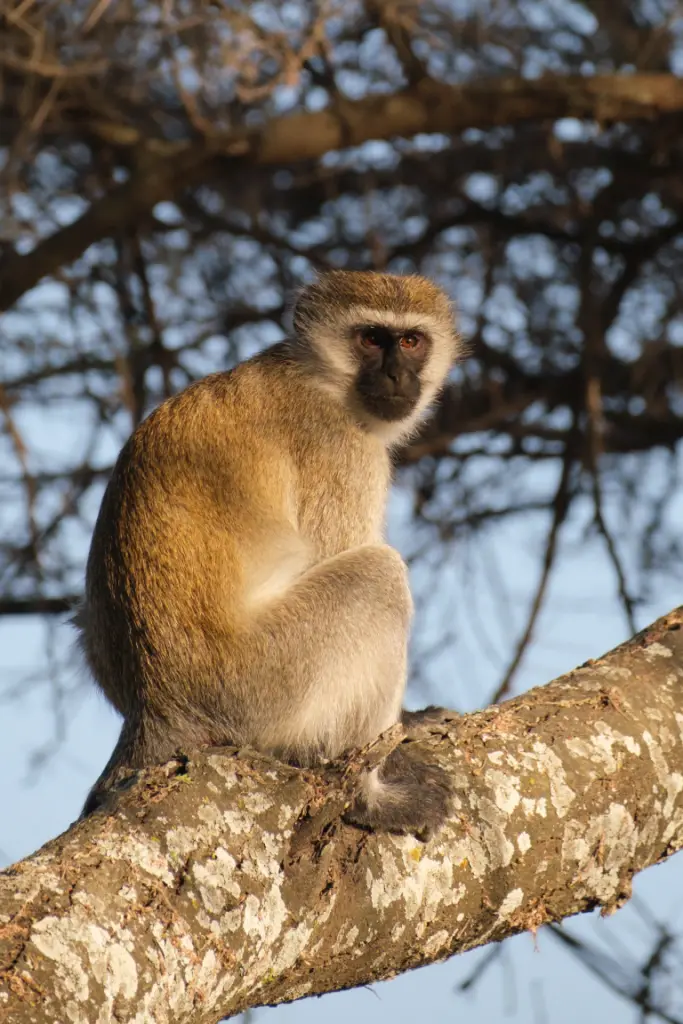
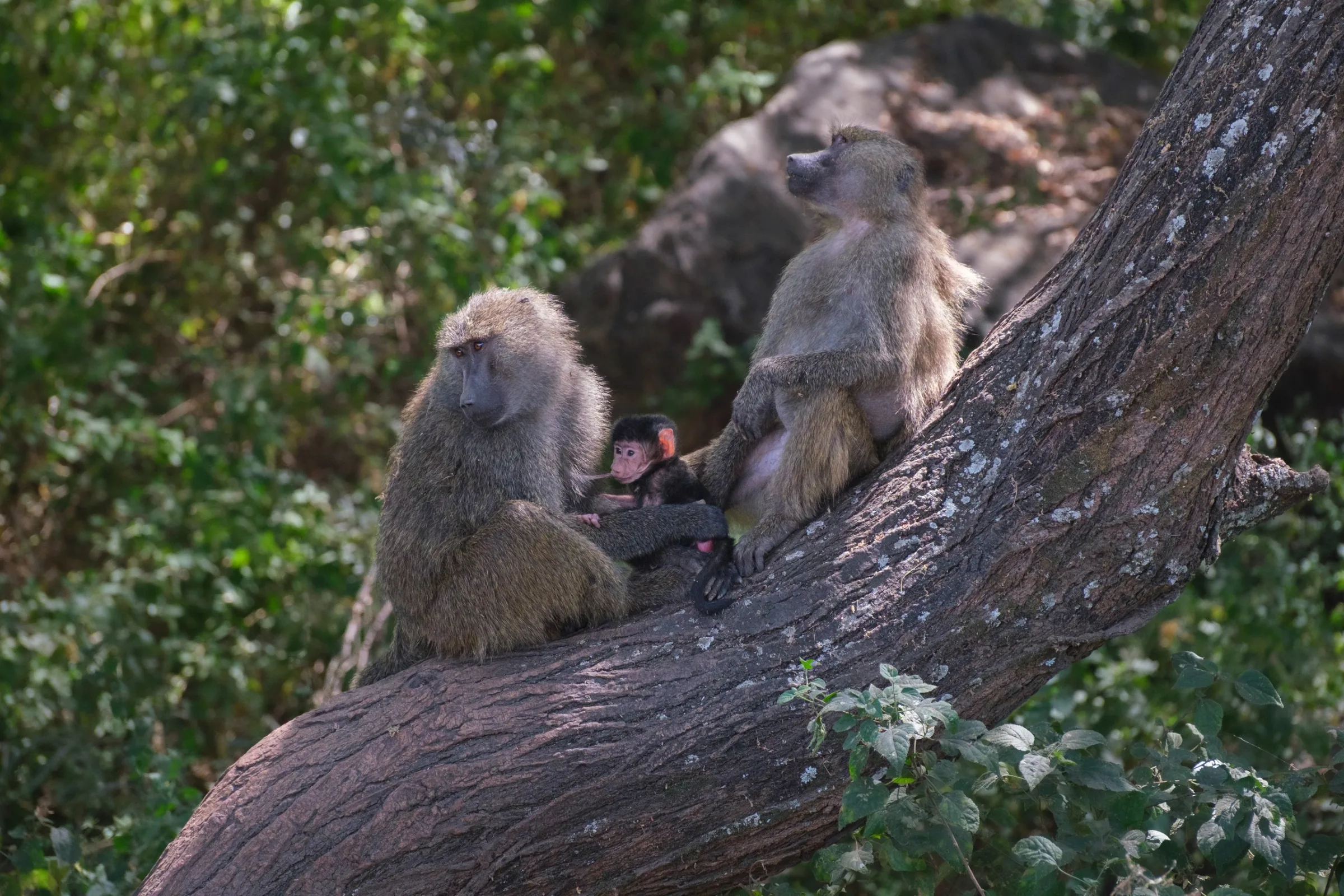
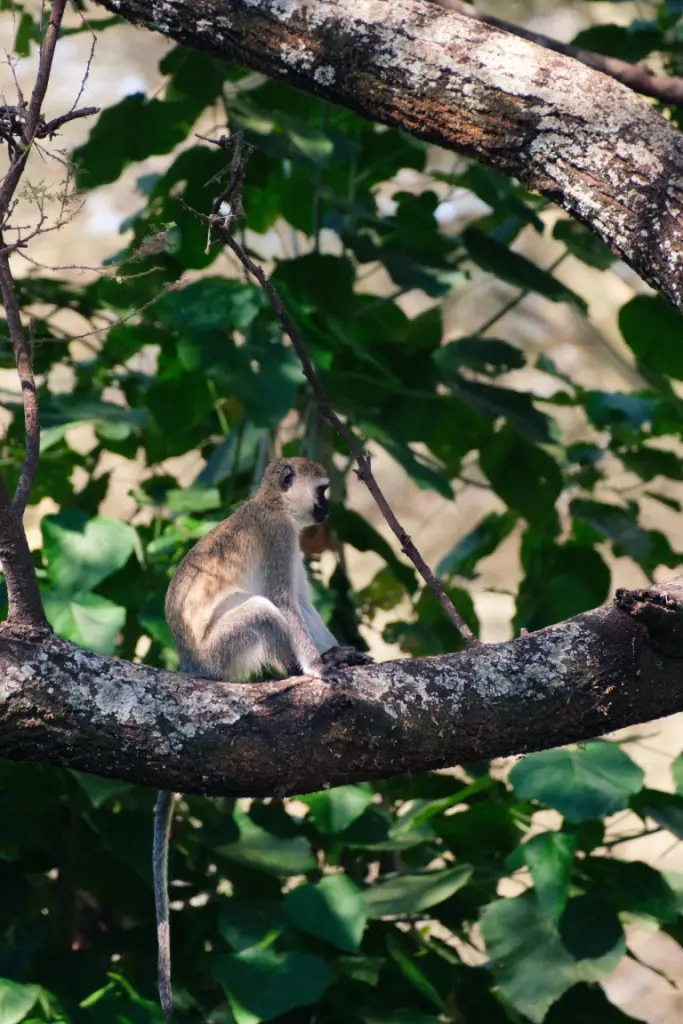
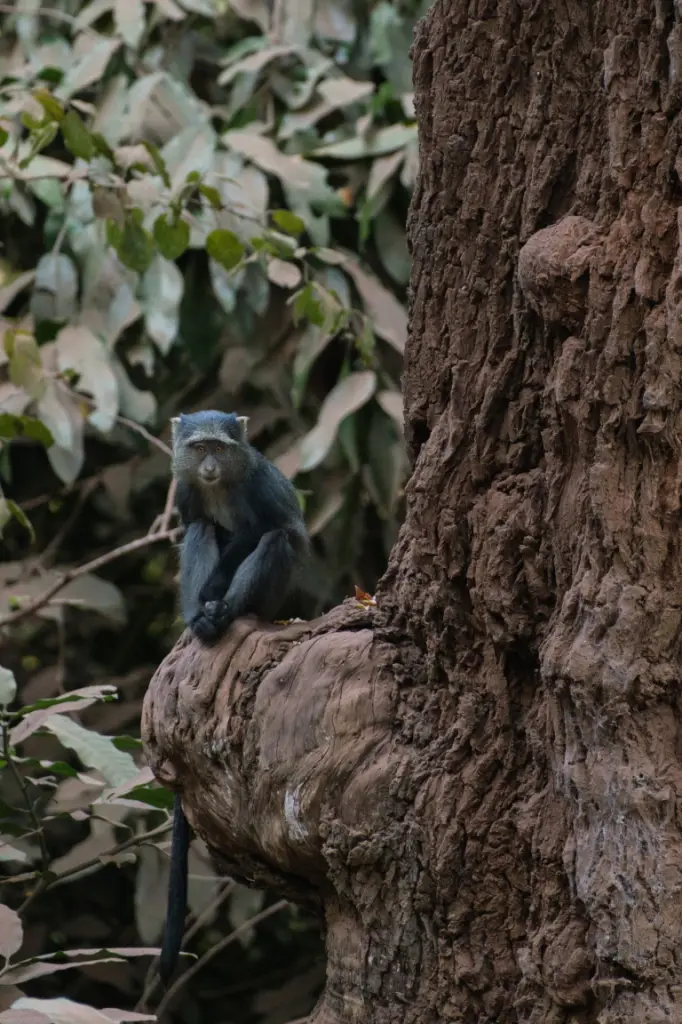
We come across many monkeys, sometimes gathered in small troops, moving through this forest.
It is one of the things we enjoyed most about this park: a different, almost tropical atmosphere, in contrast with the traditional image people have of an African safari.
Watching elephants just a few metres away
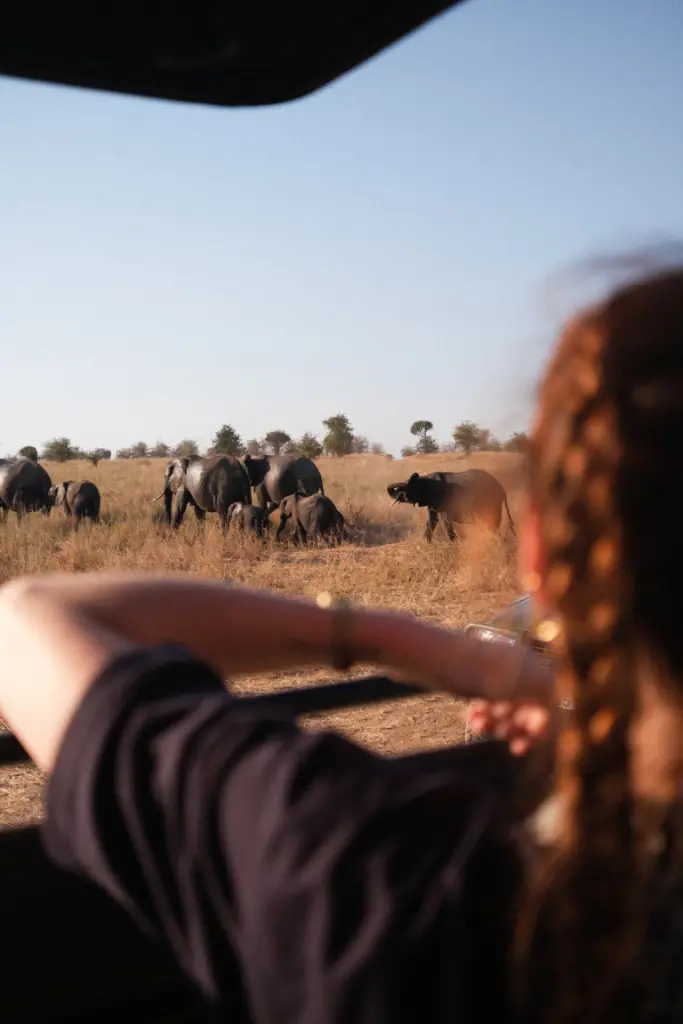
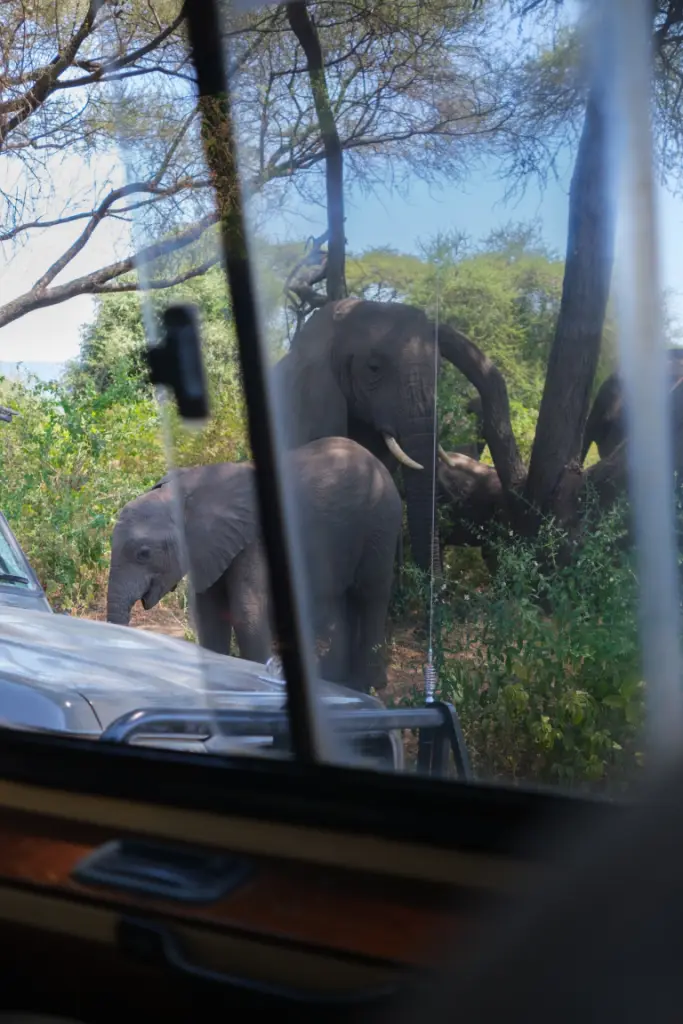
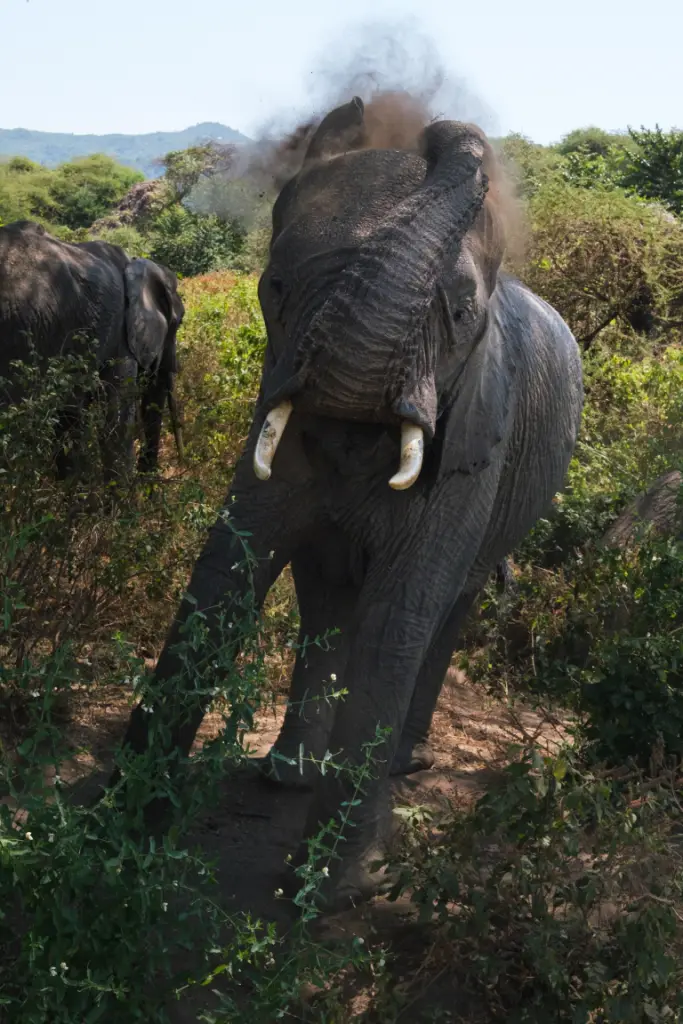
But it was above all the elephants that left an impression on us.
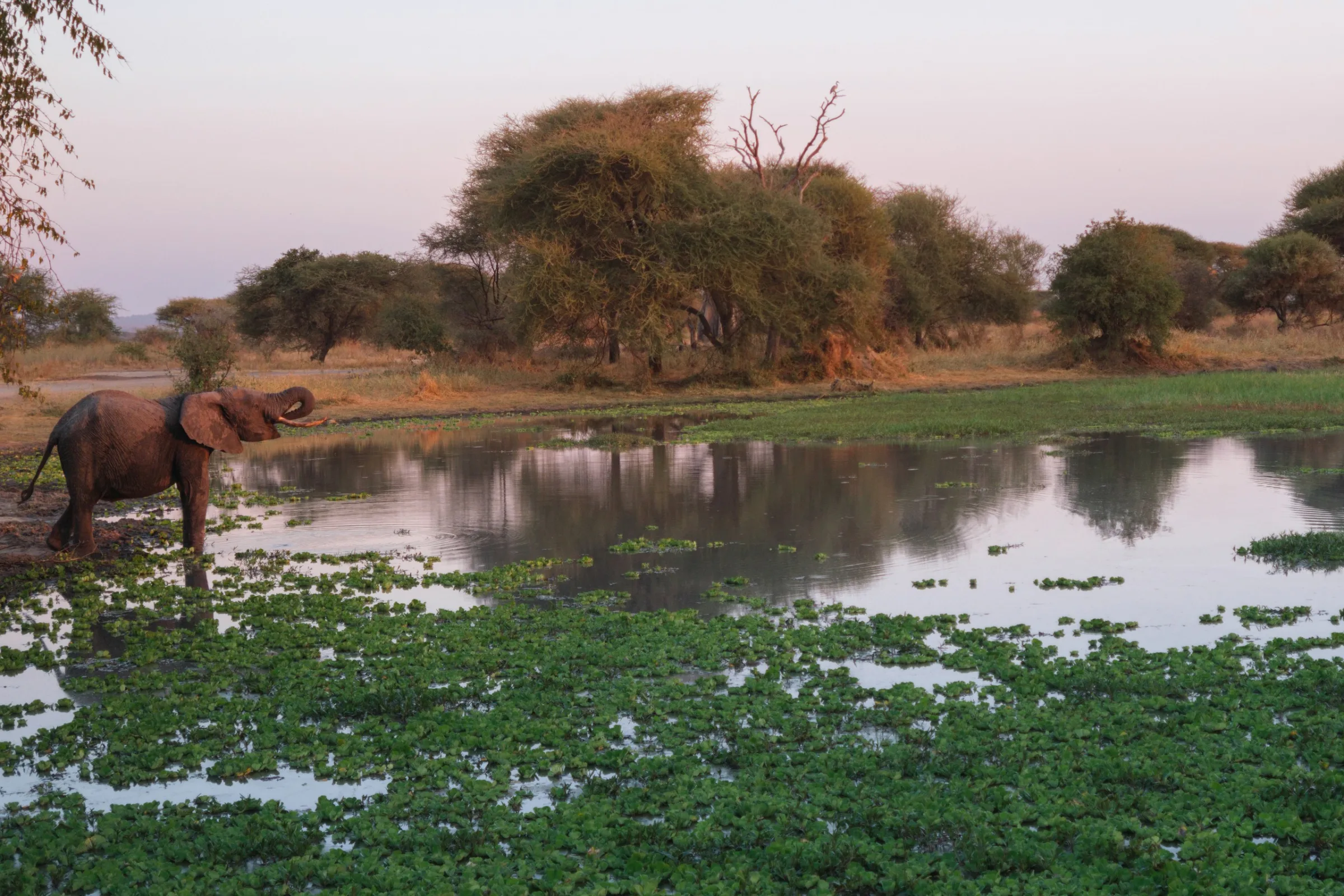
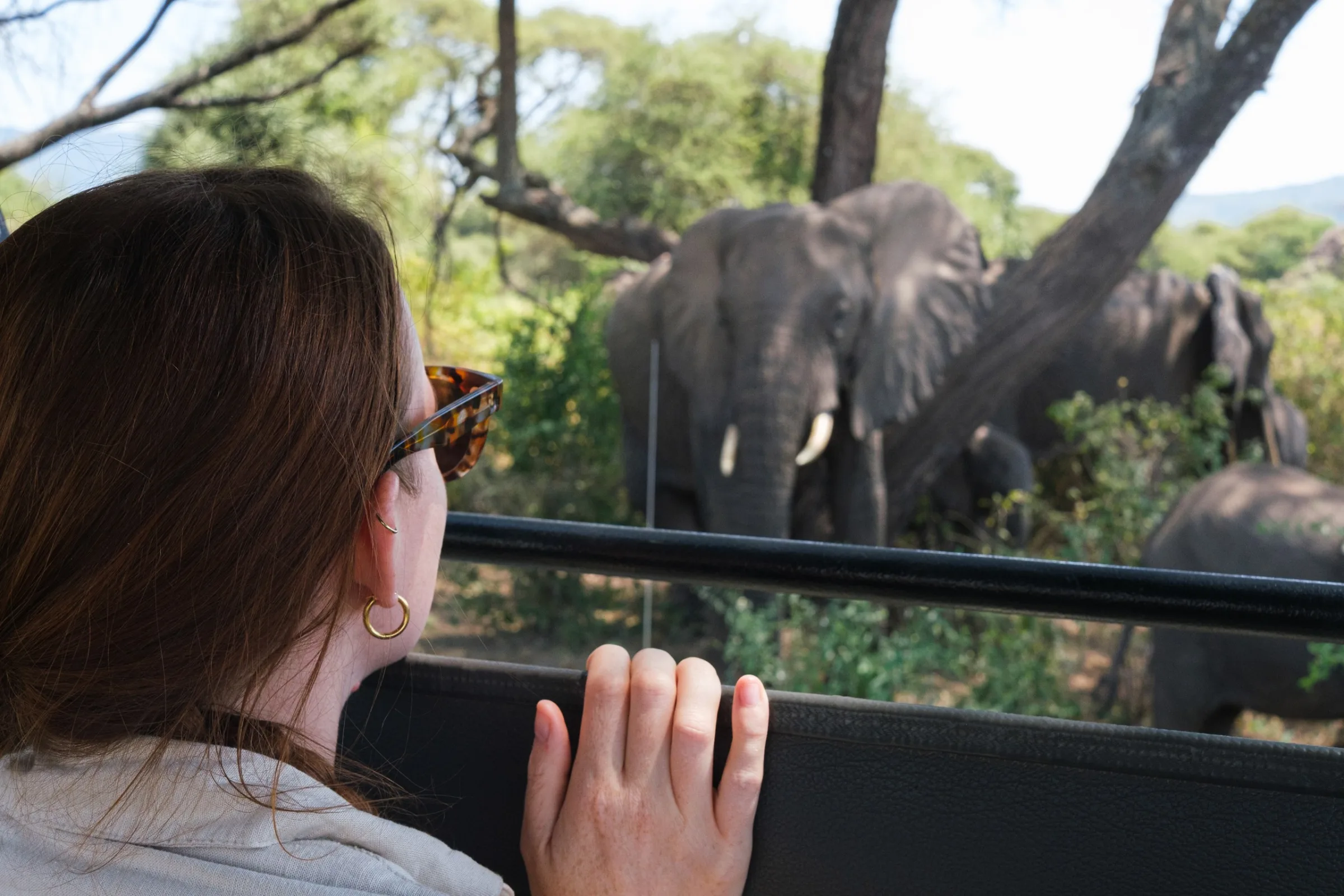
We were lucky enough to watch several families close to the tracks, among the trees. Some were feeding quietly, others were covering themselves in dust with their trunks.
A behaviour that helps them protect their skin from the sun and limit the nuisance caused by insects.
What we liked here was being so visually close to the animals, in an environment very different from Tarangire.
You watch them moving between the branches, sometimes partly hidden by the vegetation, without necessarily seeing their imposing silhouette coming.
Our verdict on Lake Manyara
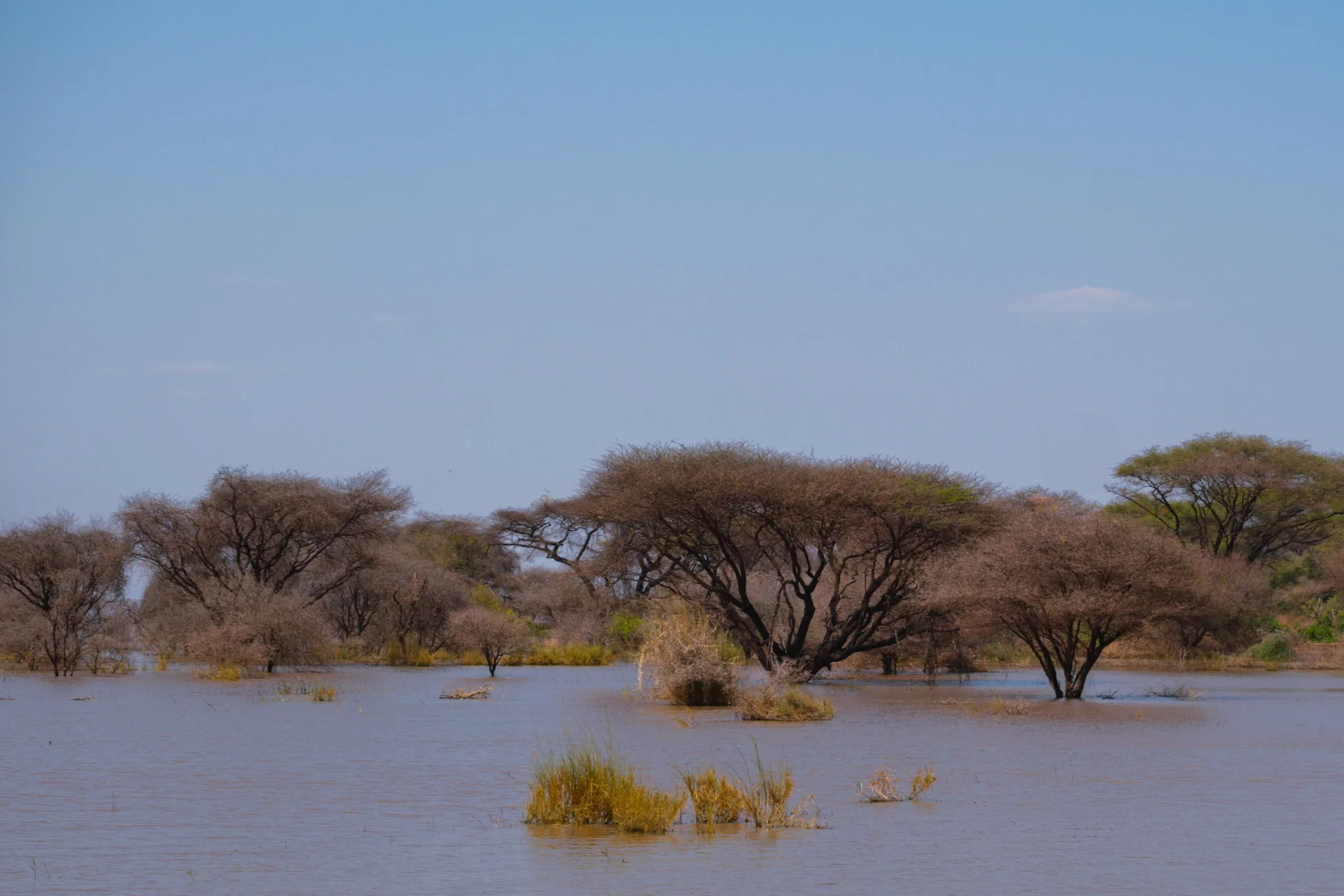
Lake Manyara National Park lies at the foot of the Great Rift Valley escarpment. It brings together several natural habitats, from groundwater forests to wetlands and the shores of the lake.
It is also renowned for its birds, especially flamingos depending on the season, as well as for its monkeys and its tree-climbing lions.
For our part, what we remember most are the monkeys and the elephants.
To be honest, it is the park that impressed us the least of the three. Not that it lacks interest, but after our first evening in Tarangire, we found this stop a little less spectacular.
It is still worth it to discover another environment and watch the animals in much denser vegetation.
Day 3 — Ngorongoro: a safari inside a volcanic crater
For our third day, we head for Ngorongoro.
We set off very early in the morning. And the first surprise: it’s cold!
The road climbs gradually, the temperature drops and we gain altitude until we reach the heights of the crater.
At around 2,300 metres above sea level on the rim, the climate has little in common with that of the plains we crossed on the previous days.
Then the landscape opens up before us.
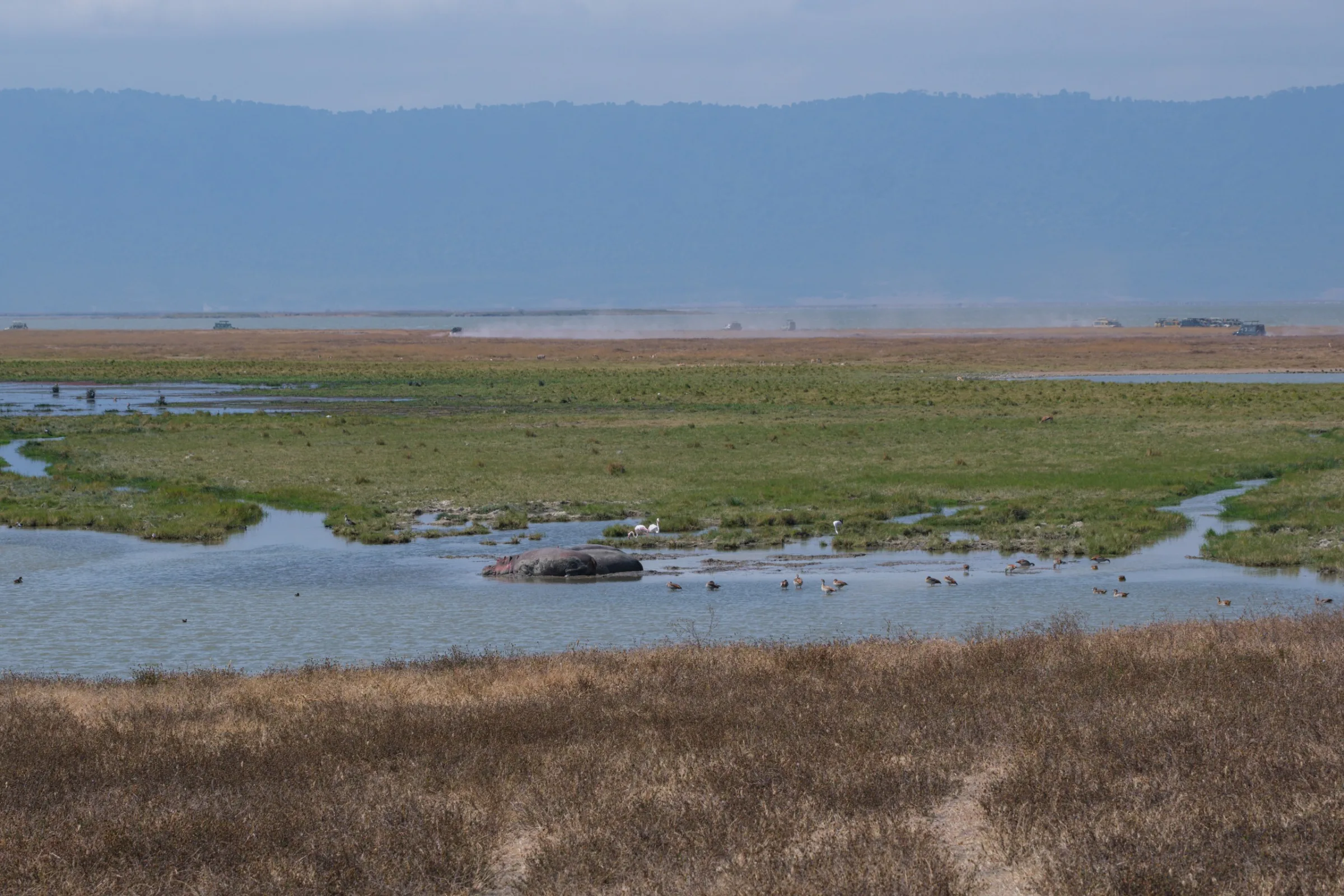
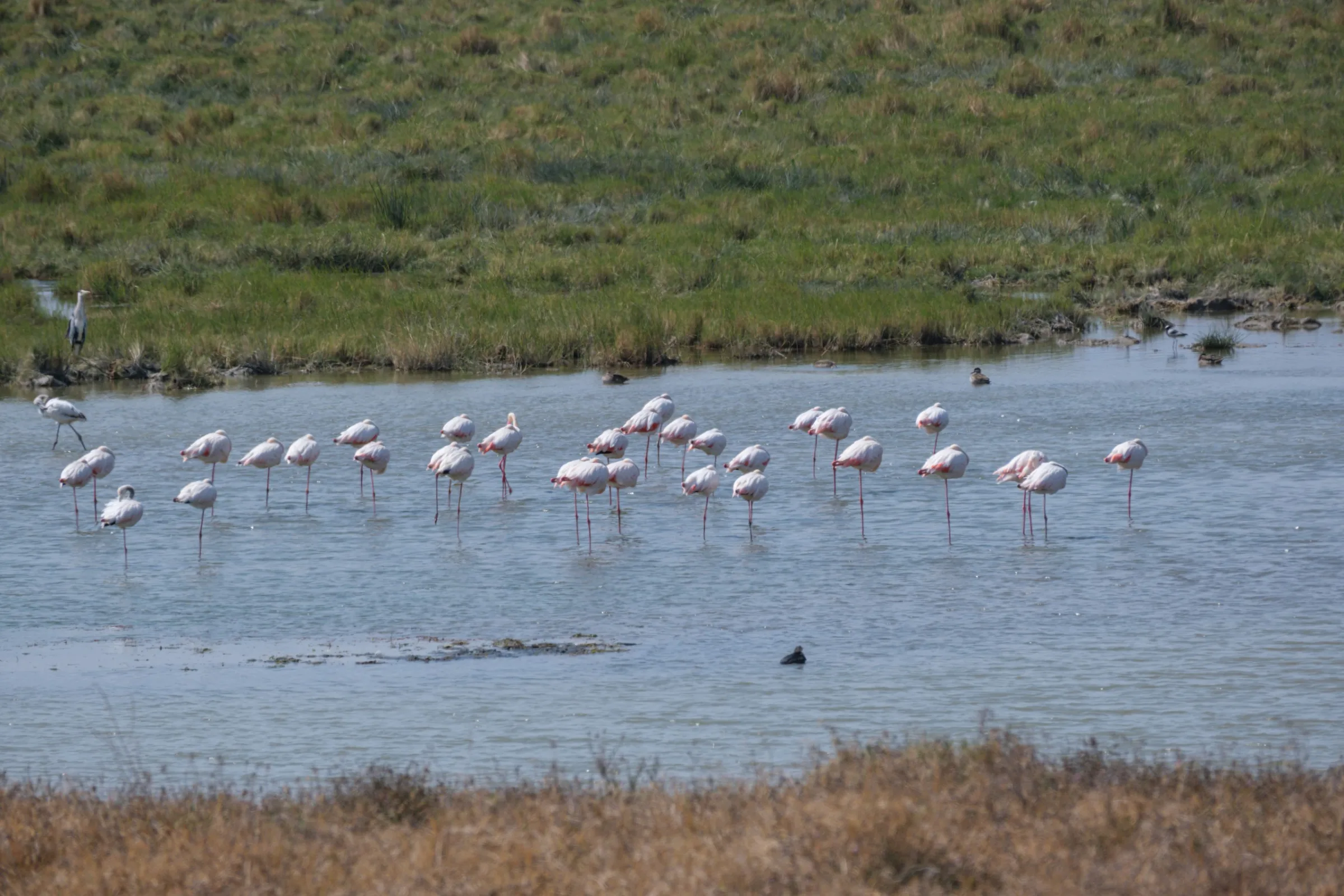
Below appears a vast expanse surrounded by hills, with grasslands, watering holes and a few wooded areas. The whole forms a setting that is hard to compare with anything we had seen until then.
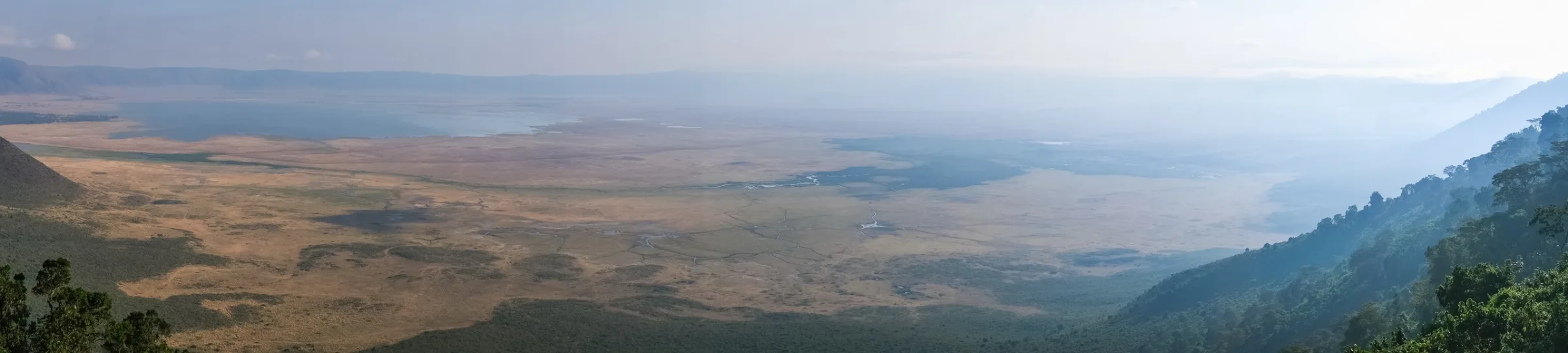
A landscape that reminded us of Mongolia
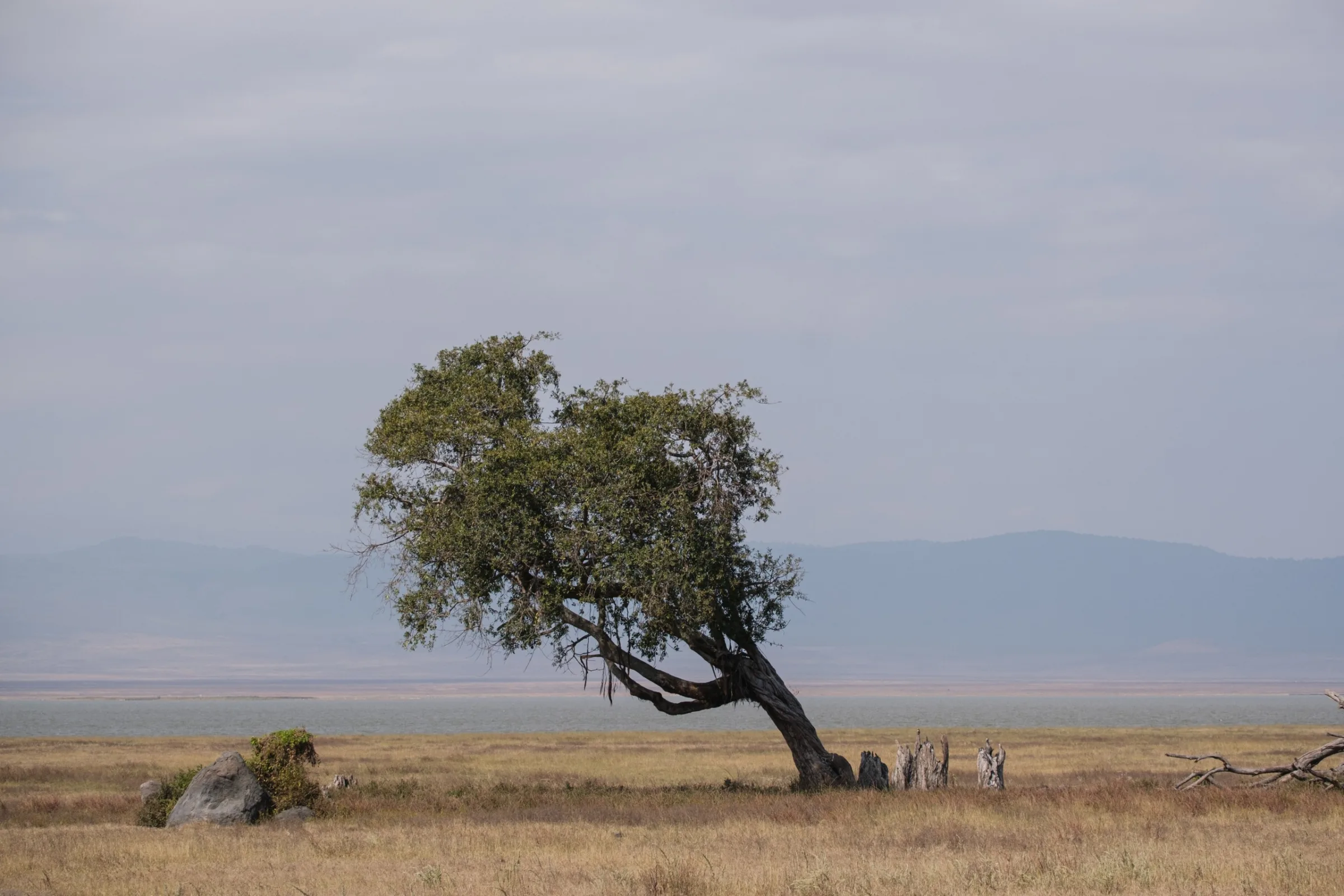
With its vast grassy expanses, its open horizons and that sense of immensity, Ngorongoro sometimes reminded us of certain landscapes in Mongolia.
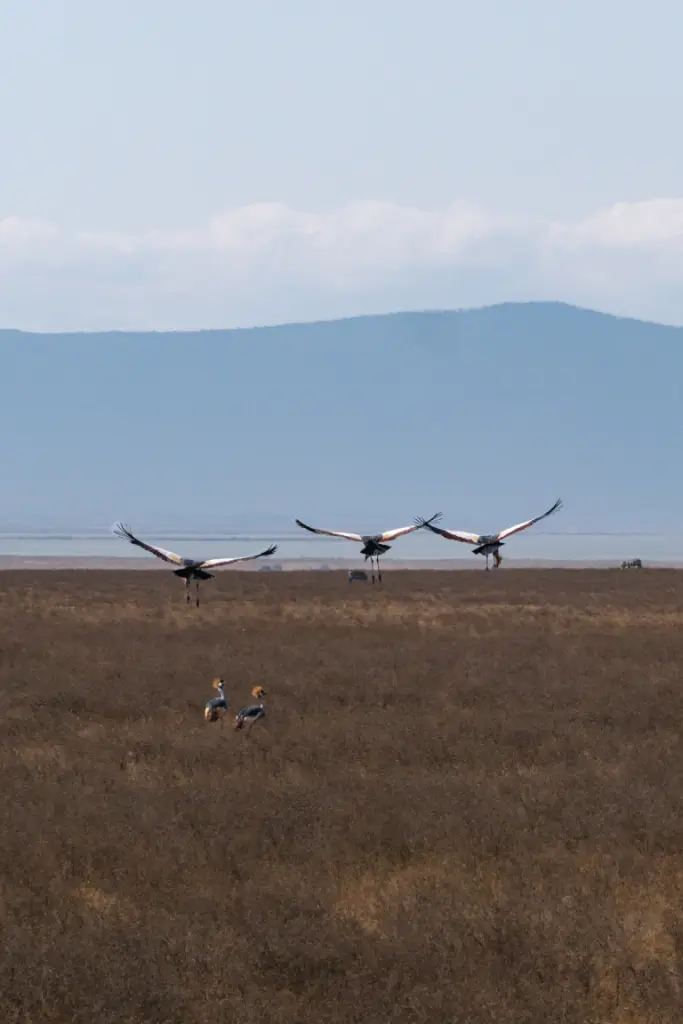
The scenery varies a lot from place to place, alternating between savannah, grasslands, wetlands and small patches of woodland.
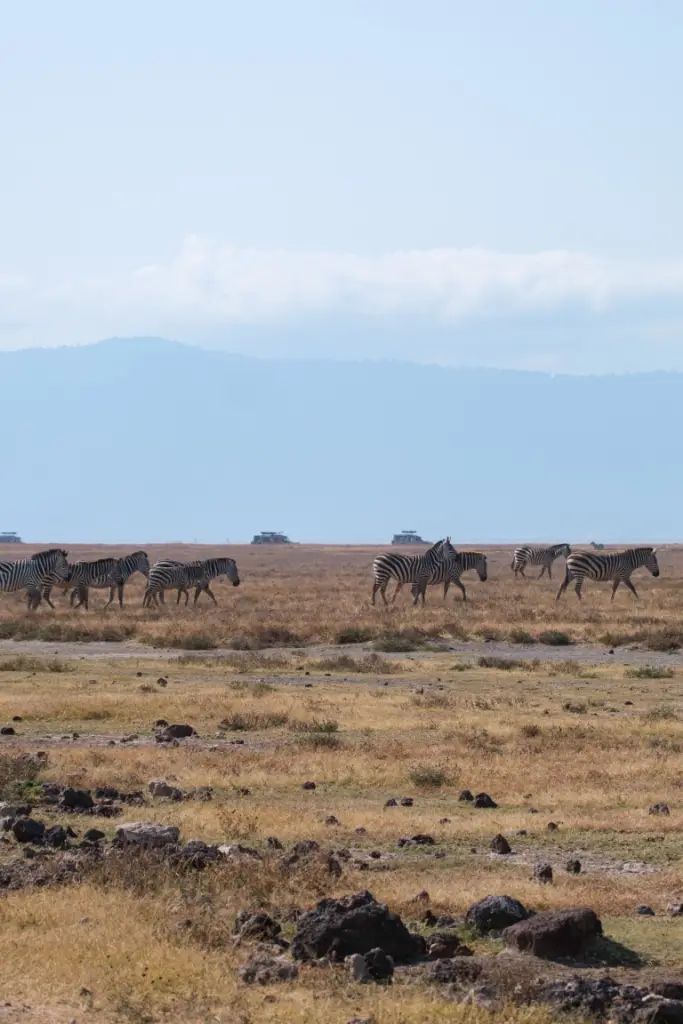
What strikes you most is the visibility. You can make out herds very far away on the plain, sometimes tiny moving silhouettes in the middle of the landscape.
The crater is in fact a huge volcanic caldera, formed after the collapse of an ancient volcano. Its floor lies about 600 metres below the rim, with a diameter of around twenty kilometres.
Ngorongoro is part of a conservation area that has been a UNESCO World Heritage Site since 1979.
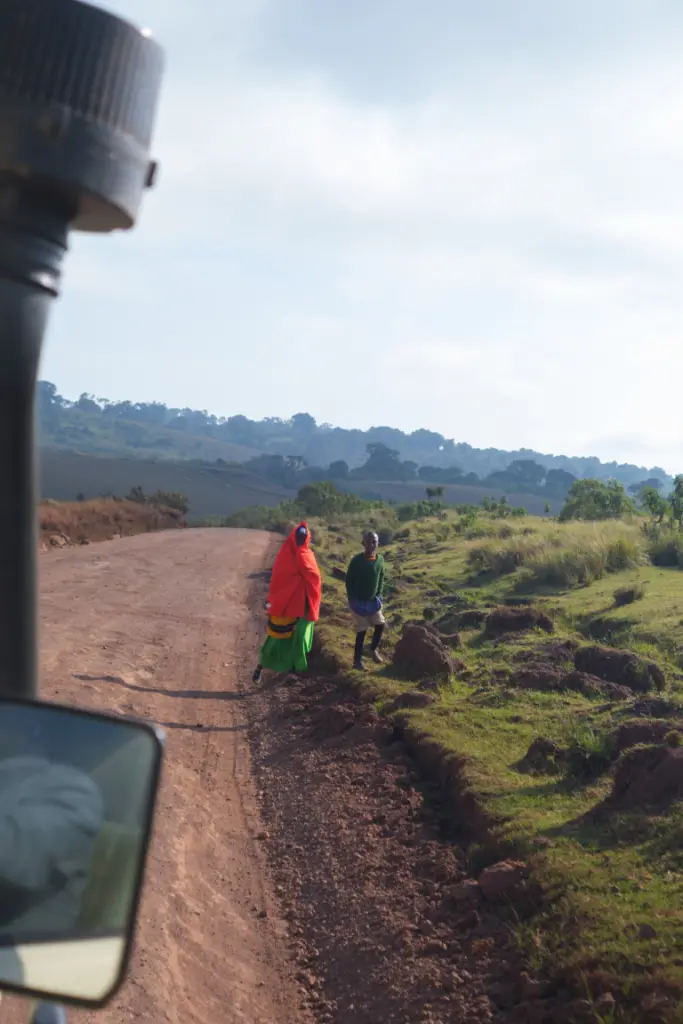
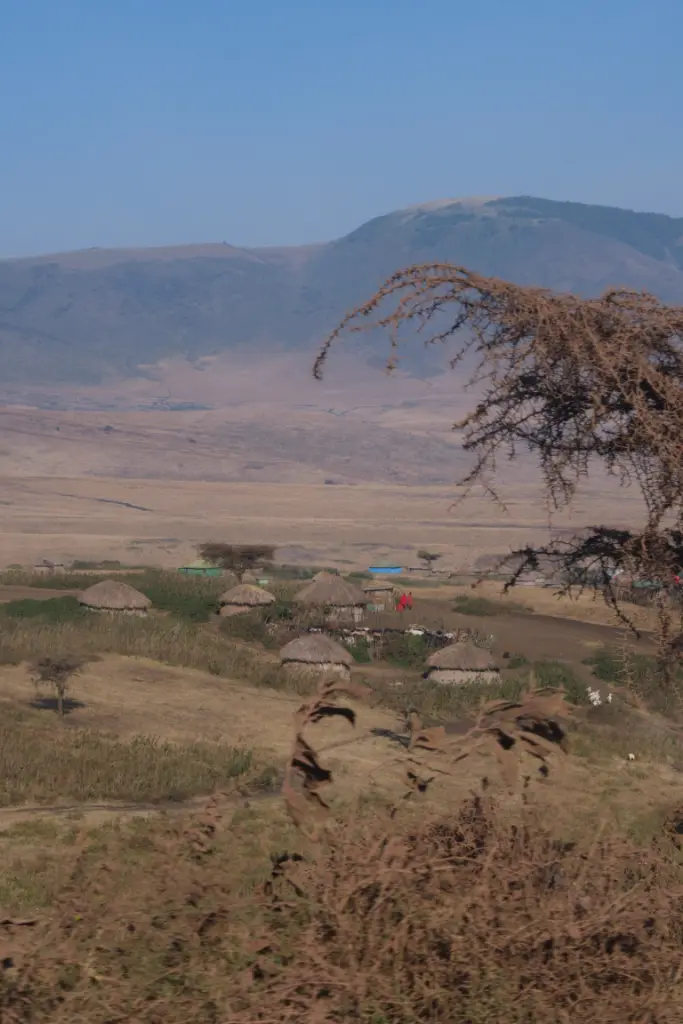
Unlike traditional national parks, this area also has an important human dimension: Maasai communities have lived here for generations, although land-use restrictions and relocation policies are now the subject of strong tensions.
A family of lionesses and their cubs
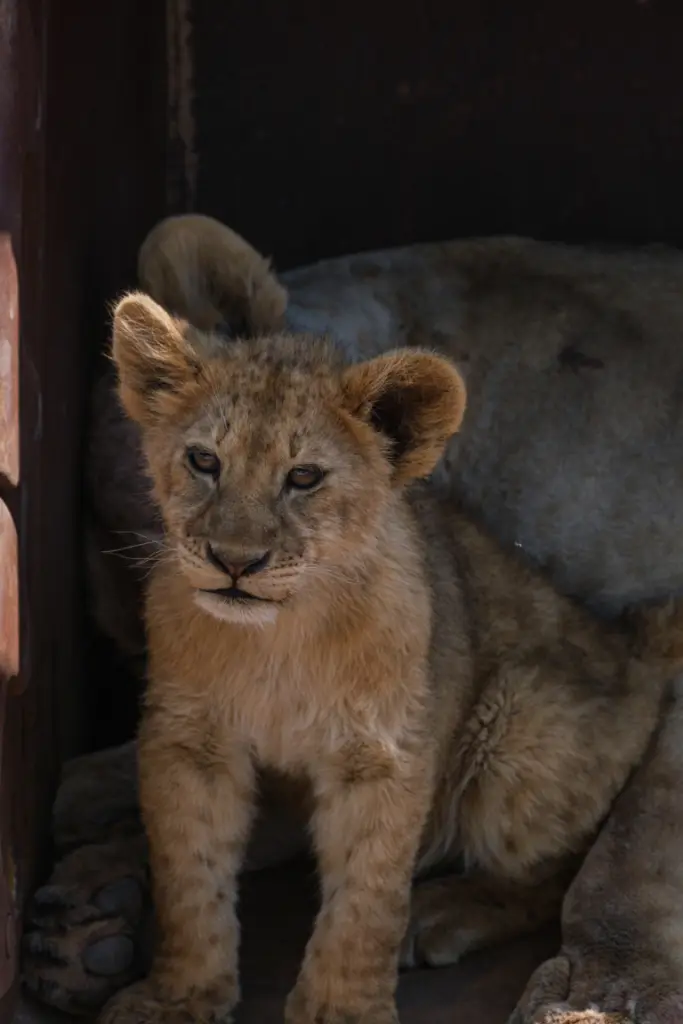
One of our best moments in Ngorongoro was coming across a family of lionesses with their cubs.
During safaris, guides regularly communicate with each other by radio. They share information about the animals’ movements and interesting sightings.
It was largely thanks to these exchanges that we were able to reach an area where this family of lions was.
The animals were settled close to an area where there was some construction machinery.
We were able to watch them for a long time, see the little ones moving around the adults and even hear their calls, which we were lucky enough to record on video.
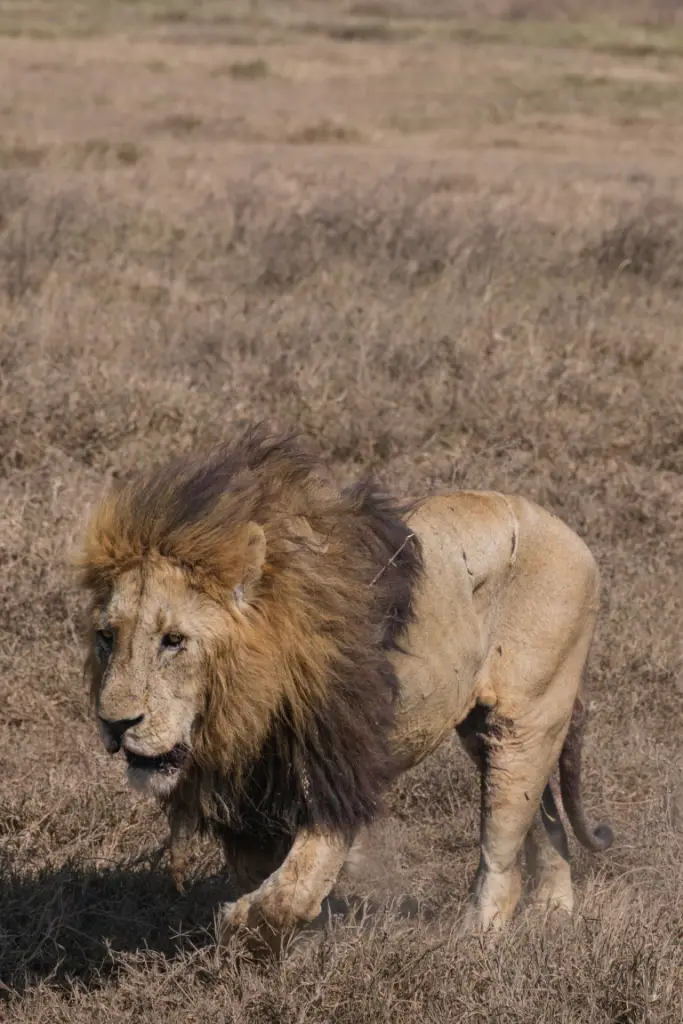
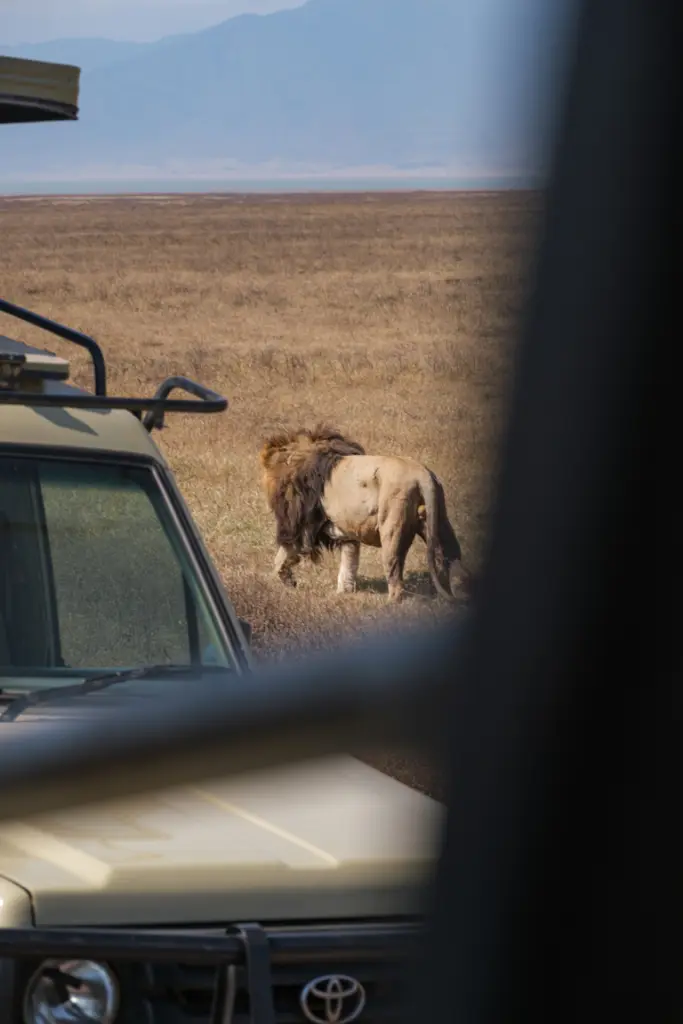
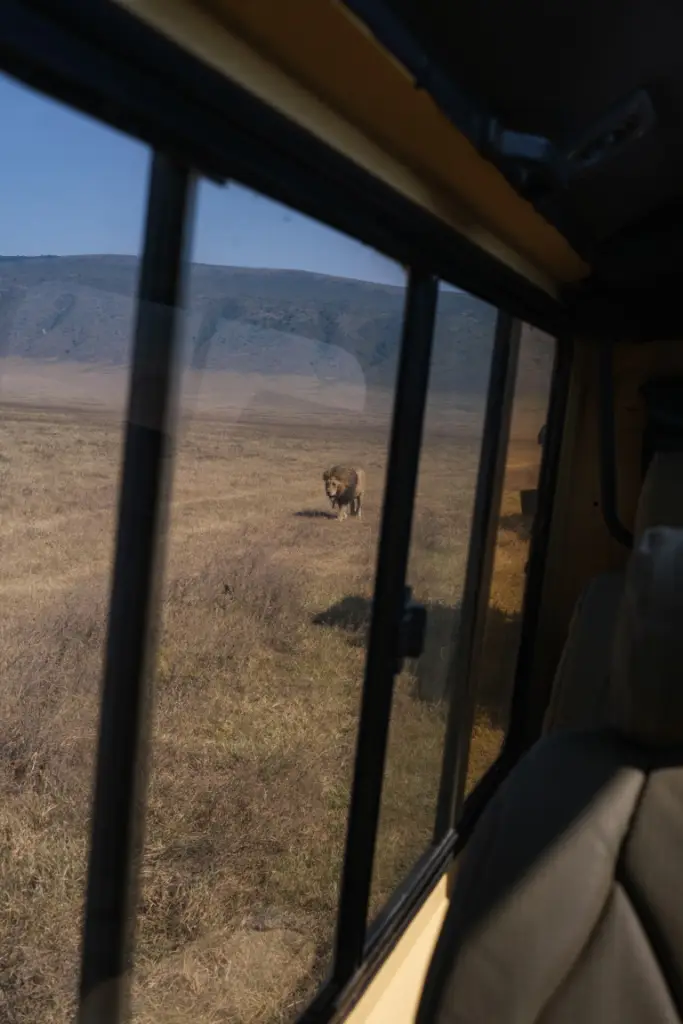
A little further on, we also spotted a lone lion, visibly injured, struggling across the vast plains of the crater. He may have been injured in a fight with another lion. A scene that reminded us that, behind the beauty of these landscapes and animals, life in the wild can also be particularly harsh.
Seeing lions in their natural environment is already impressive. But discovering cubs with their family, hearing their calls and coming across this lone lion in such a grandiose setting was something else entirely.
Encounters that will remain among the most striking memories of our safari in Tanzania.
Hyenas, hippos and other encounters
Ngorongoro also had many other sightings in store for us.
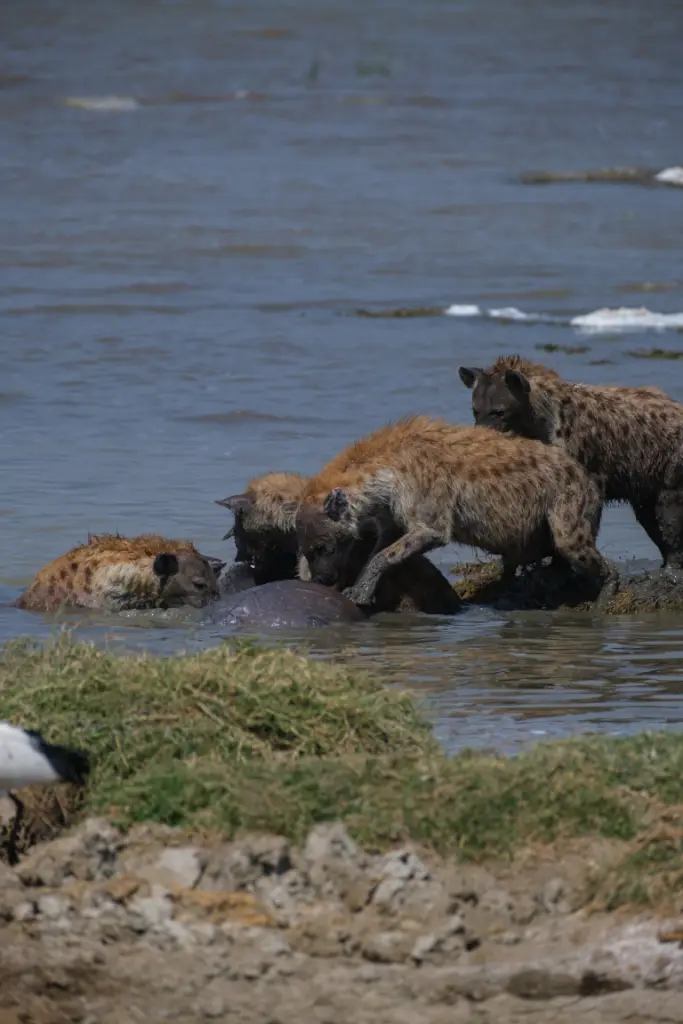
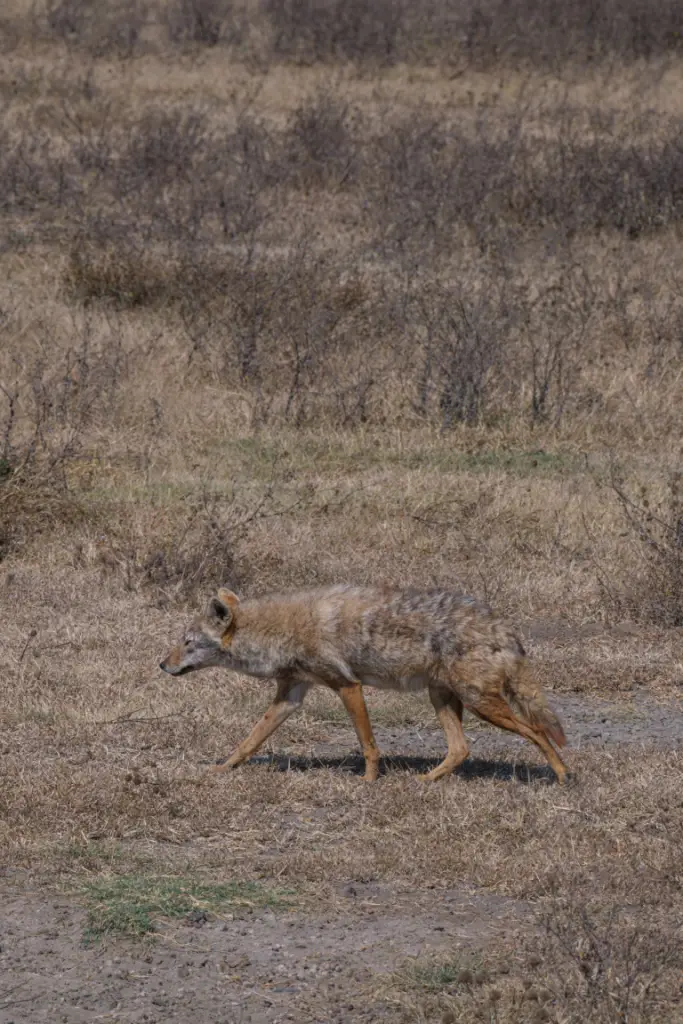
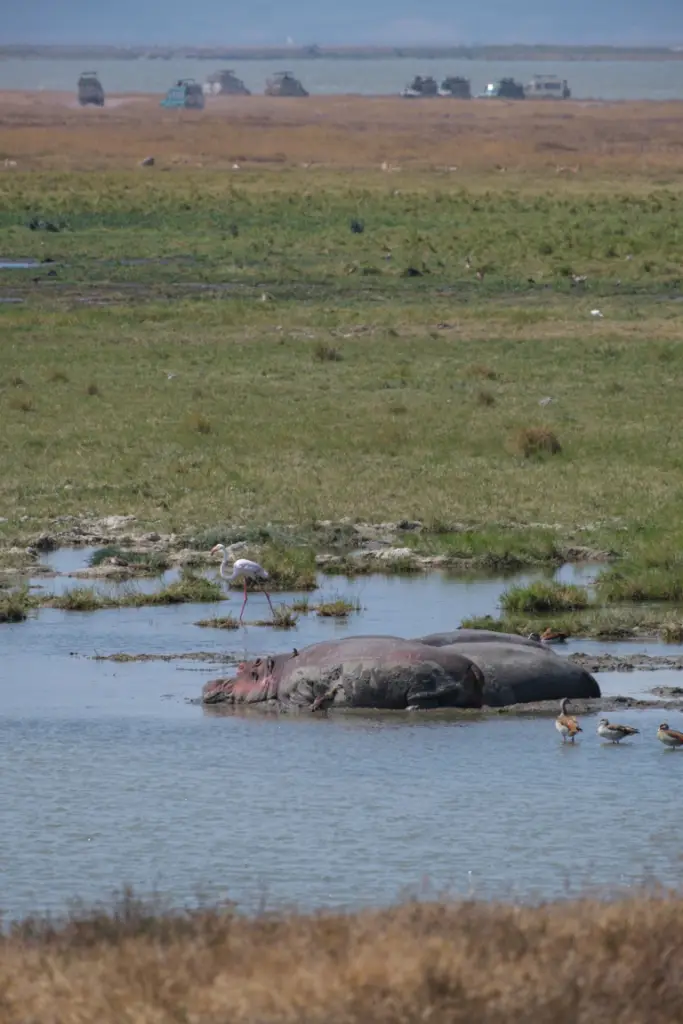
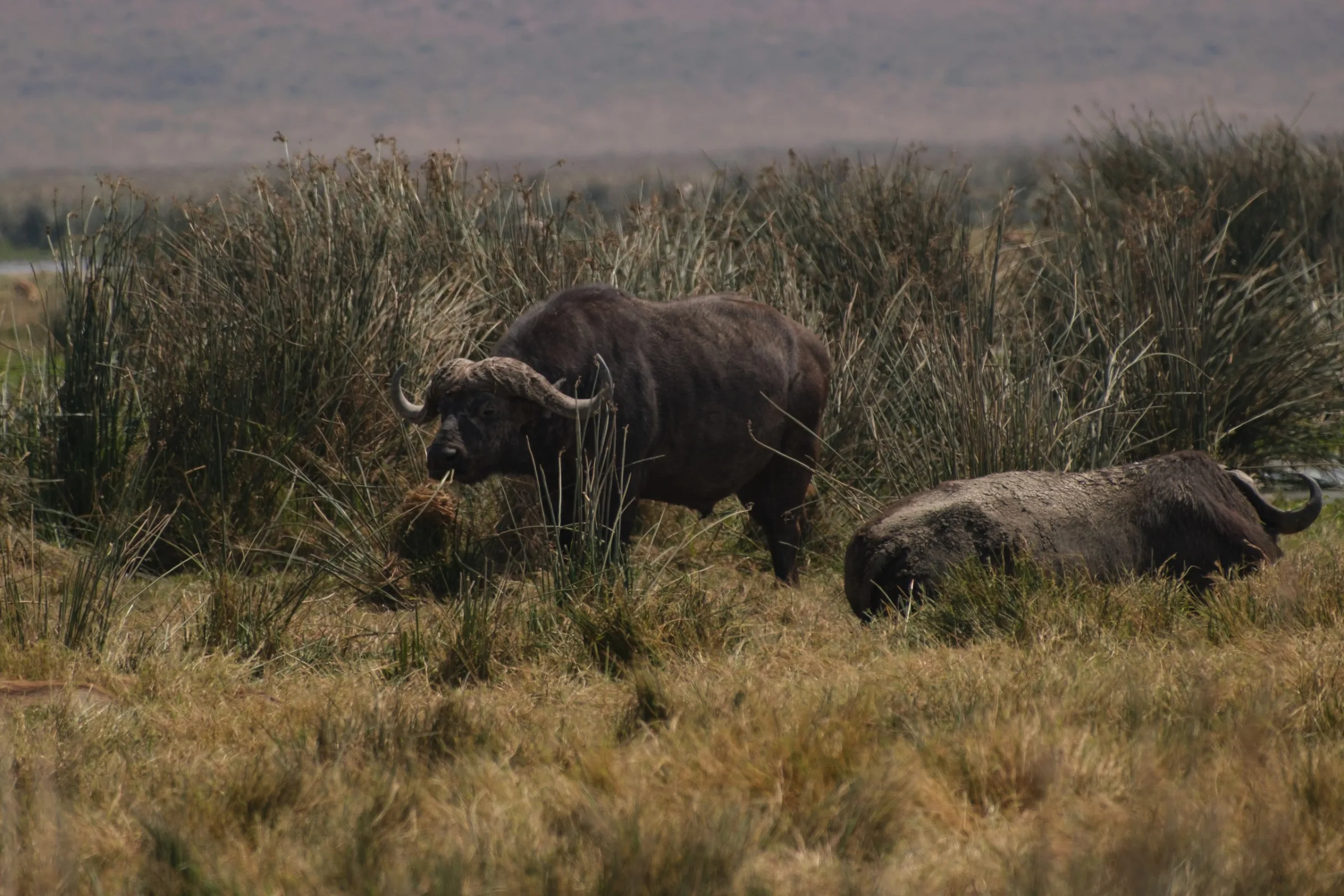
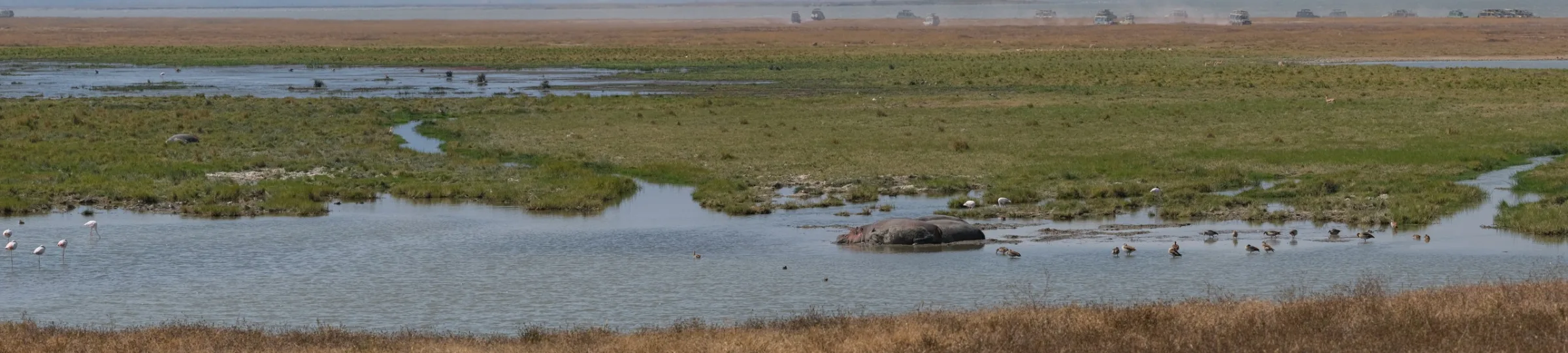
We came across hyenas, elephants, hippos and several species of grazing animals moving across the plains.
Each encounter had its own interest, but it was above all the whole that left an impression on us: such a concentration of animals in such a unique setting.
We also enjoyed the break in a dedicated area, in the middle of this impressive natural setting.
The organisation on site is well thought out, in particular to let travellers take a break without disturbing the animals.
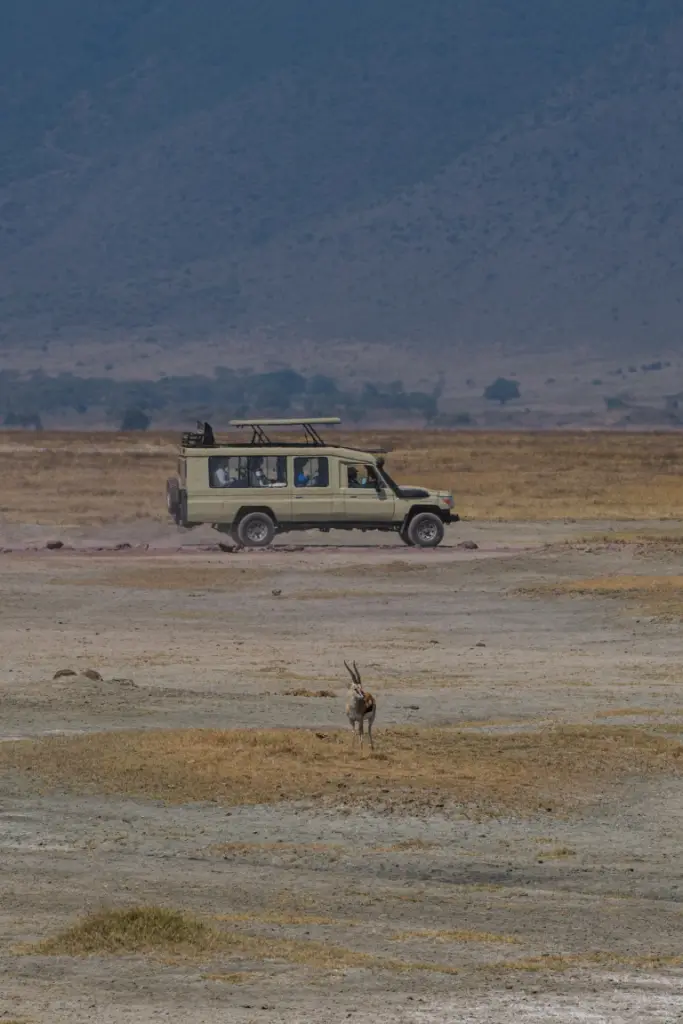
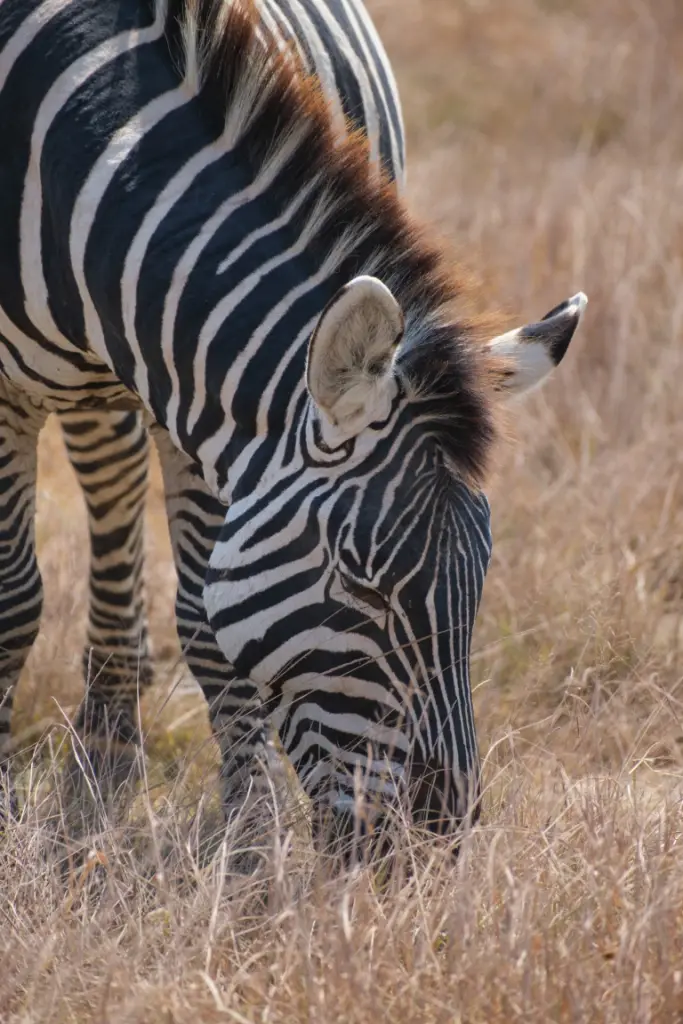
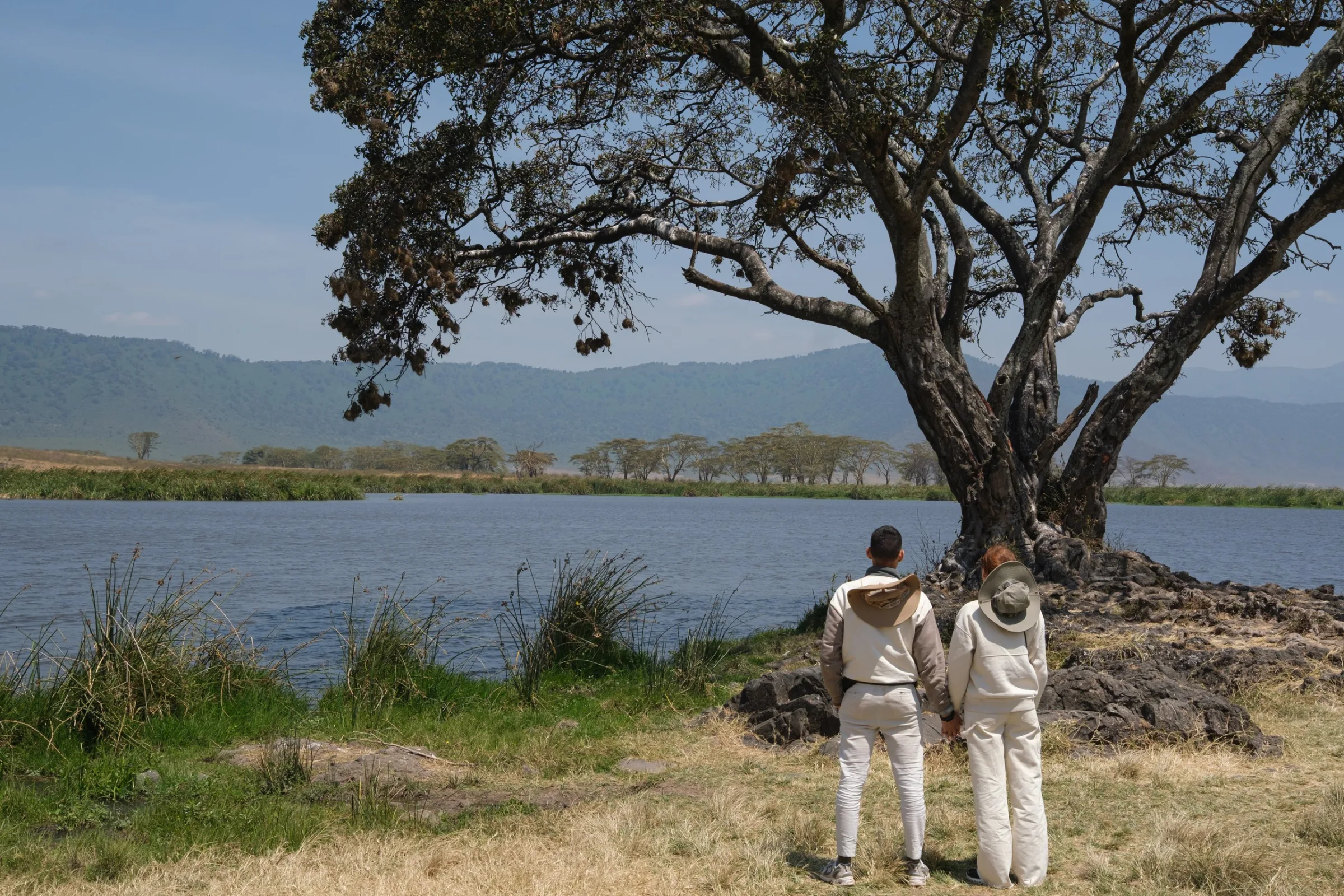
An exceptional place, but a very touristy one
There is one aspect of Ngorongoro that surprised us, however: the number of vehicles.
In some places, especially when an interesting animal is spotted, several vehicles can quickly end up in the same spot.
You then realise how much the safari has become a genuine organised tourist activity.
Of course, we were part of those visitors ourselves. So it would be a little too easy to criticise crowds we were contributing to.
It takes nothing away from the beauty of the place, but you should be aware of it before you go.
Fortunately, the sheer size of the crater also means you can find much calmer moments, with long tracks and landscapes that seem to stretch as far as the eye can see.
Of our three stops, Ngorongoro is certainly the one whose landscapes impressed us the most.
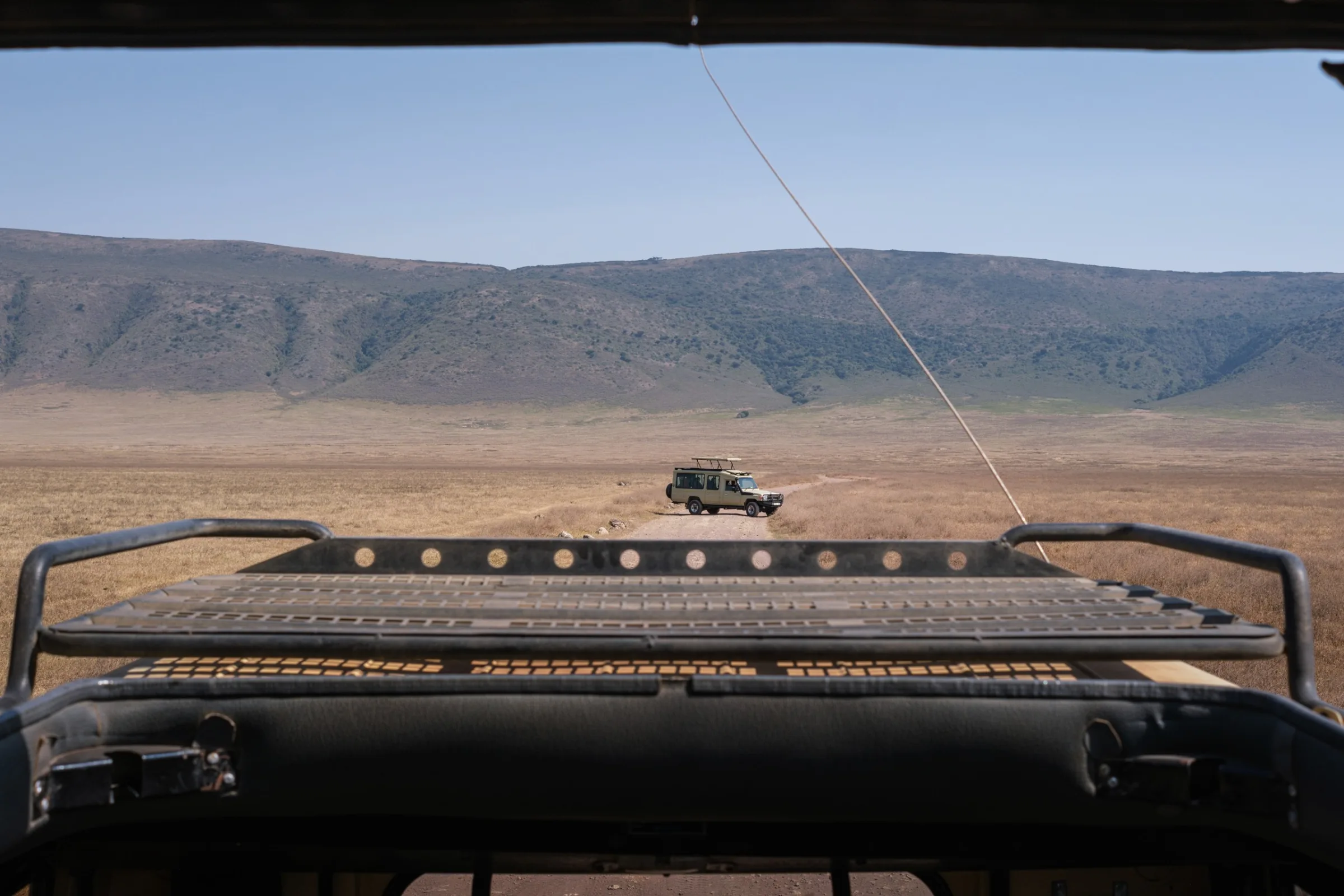
Our Tanzania safari on video
Three days of safari summed up in a few minutes, from the first giraffes in Tarangire to the lion cubs of Ngorongoro.
The video lets you revisit the landscapes we crossed, the movements of the animals and above all moments that are hard to convey with photographs alone.
- Length
- 7:01vertical 9:16 format
- Filmed
- 3 parks
Our verdict: would we do a safari in Tanzania again?
Without hesitation, we are glad we had this experience.
Watching elephant families, spotting lionesses in the trees at sunset, discovering lion cubs in Ngorongoro… These are memories we will keep for a long time.
We also discovered three very different environments in just a few days, from the savannah of Tarangire to the forest of Lake Manyara and the great plains of the crater.
Not everything was perfect. We would have liked better organisation at the start, a slightly more talkative guide and more time to enjoy some of the accommodation.
But the moments spent close to the wildlife more than made up for these setbacks.
If we were to do this trip again, we would book directly with a local agency, taking more time to compare what is offered and to choose the accommodation.
As for the length, we would probably keep this three-day format, which allowed us to discover the essentials of what we were looking for on a first safari.
Tanzania gave us exactly what we had come for: breathtaking landscapes, exceptional wildlife and animal encounters that no zoo or documentary could ever replace.
Planning a safari in Tanzania: our tips and lessons learned
After three days of safari in Tanzania, we learned a few lessons about the organisation, the accommodation and the equipment to bring. Here are our tips and the things we would do differently if we were to go again.
How many days should you plan for a safari?
It was one of the questions we had before leaving.
After these three days, our answer is yes: for a first experience like ours, three days were enough.
A day of safari often means eight to ten hours spent in a vehicle, breaks included.
Even if watching animals remains fascinating, you also have to accept long periods of searching, the drives between the different areas and sometimes seeing the same species again and again.
We loved this experience, but we wouldn’t necessarily have wanted to extend the safari for another week.
Of course, it depends on each person. Wildlife photography enthusiasts or travellers who want to discover other parks, such as the Serengeti, may find real value in staying longer.
For us, discovering three different sites in three days already gave a wonderful overview of Tanzania’s landscapes and wildlife.
Should you book through an agency?
We usually organise our trips ourselves, from transport to accommodation and the different stages of our itineraries.
For Tanzania, however, we decided to do things differently.
Organising a safari seemed more complex to us than a classic road trip: we had to plan the transfers between parks, book the accommodation, find a guide and have a suitable vehicle. So we chose to entrust this part of the trip to Tourlane, an agency specialising in tailor-made travel.
The exchanges and the booking went very smoothly. Their app is also well designed and makes it easy to find all the information about the trip.
Once there, we discovered that our safari was operated by Leopard Tours, a local agency based in Tanzania, which handled the guide, the vehicle and our tour.
Looking back, we would have preferred to deal directly with a local agency.
We had chosen Tourlane to make the organisation simpler, but in the end we didn’t feel this intermediary added enough value to justify the price we paid. All the more so because, contrary to what we imagined before leaving, organising a safari with a local operator doesn’t necessarily seem more complicated.
It was our first experience with a travel agency, and it didn’t really win us over.
Our advice: before booking, take the time to ask for several quotes, including some directly from Tanzanian agencies. Compare like for like: parks, entrance fees, private or shared vehicle, accommodation, meals and domestic flights.
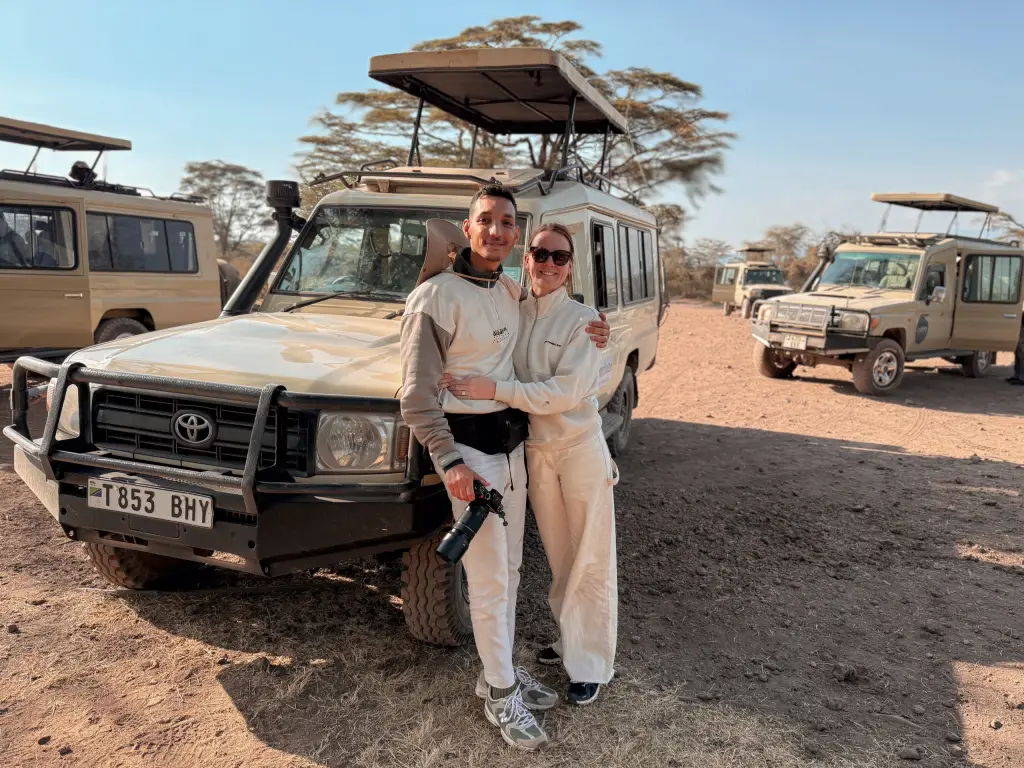
With Leopard Tours
Swipe →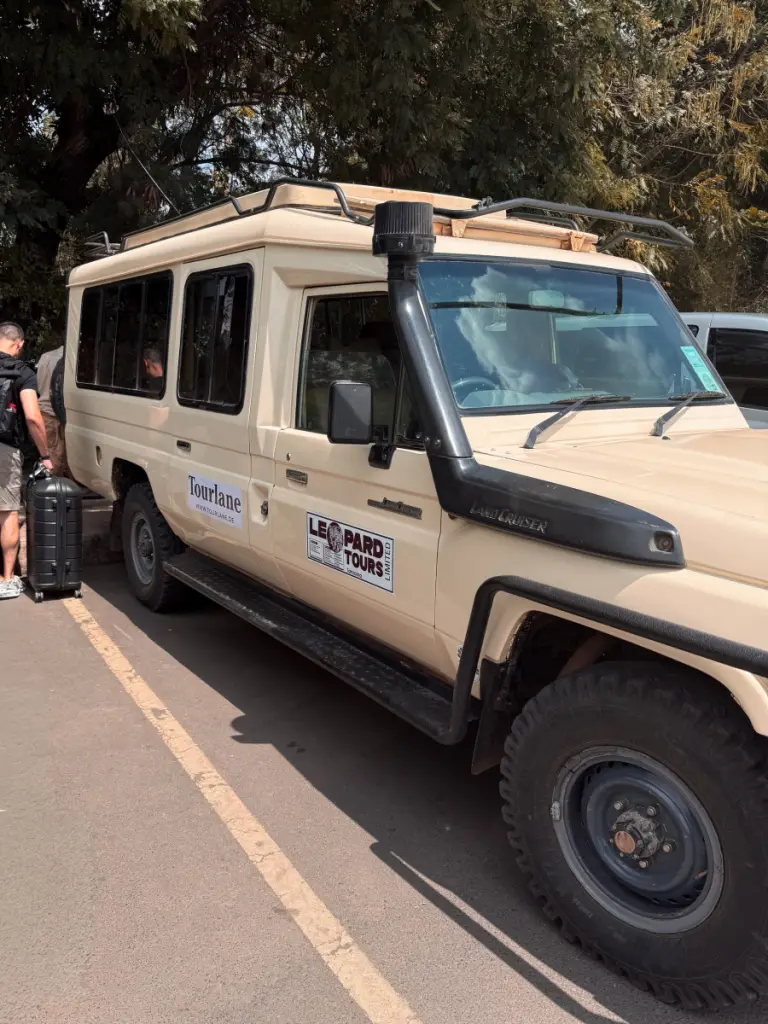
Where to stay during a safari?
During our stay, we discovered two quite different types of accommodation.
Kirurumu Manyara Lodge: a tented experience
Our first accommodation was the Kirurumu Manyara Lodge.
These are not small, classic camping tents, but large furnished tents with a real bed and a private bathroom.
The concept lets you sleep in a natural environment while keeping a certain level of comfort.
Even so, we weren’t particularly won over by the experience.
The facilities were fairly basic, the meals rather average and, generally speaking, we didn’t get that little extra comfort or attention that makes the difference after a long day of safari.
It wasn’t bad accommodation, but it’s not the one we will remember from our trip.
Pamora Farm Lodge: our favourite
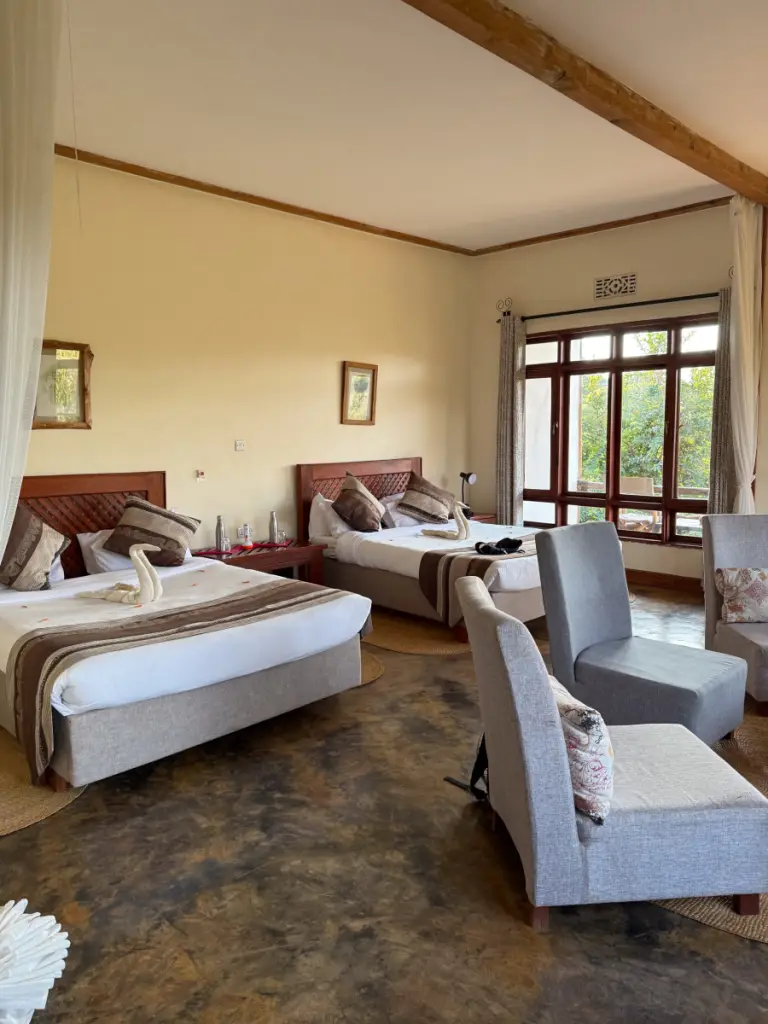
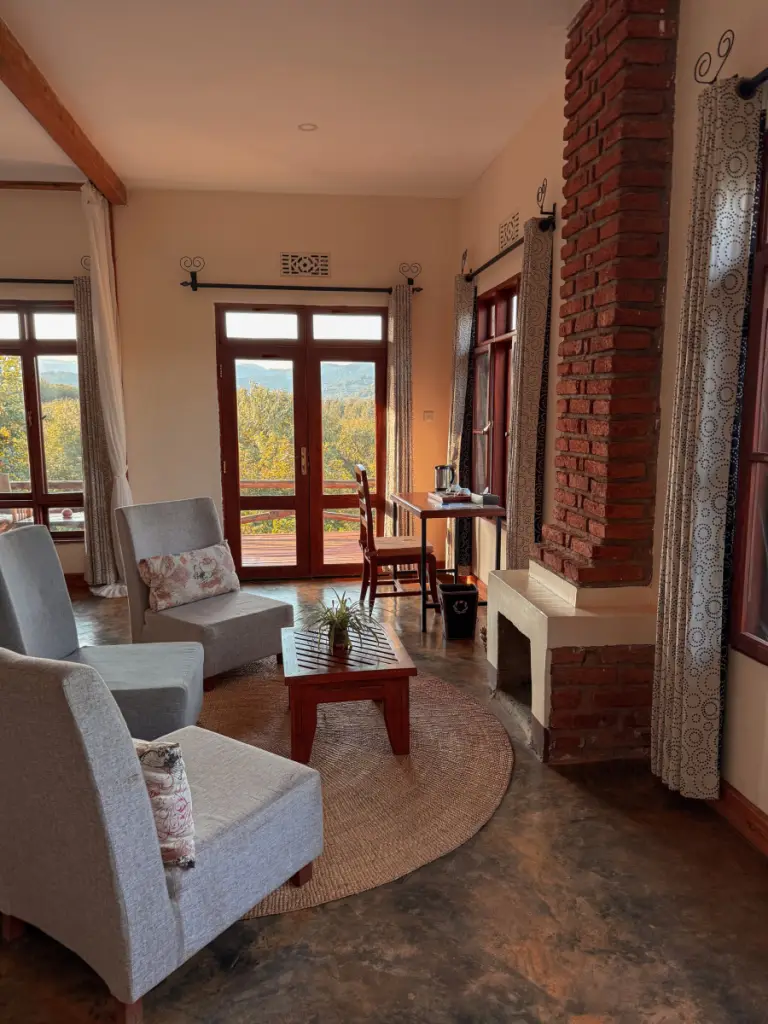
On the other hand, we really enjoyed the Pamora Farm Lodge, located in the Karatu area.
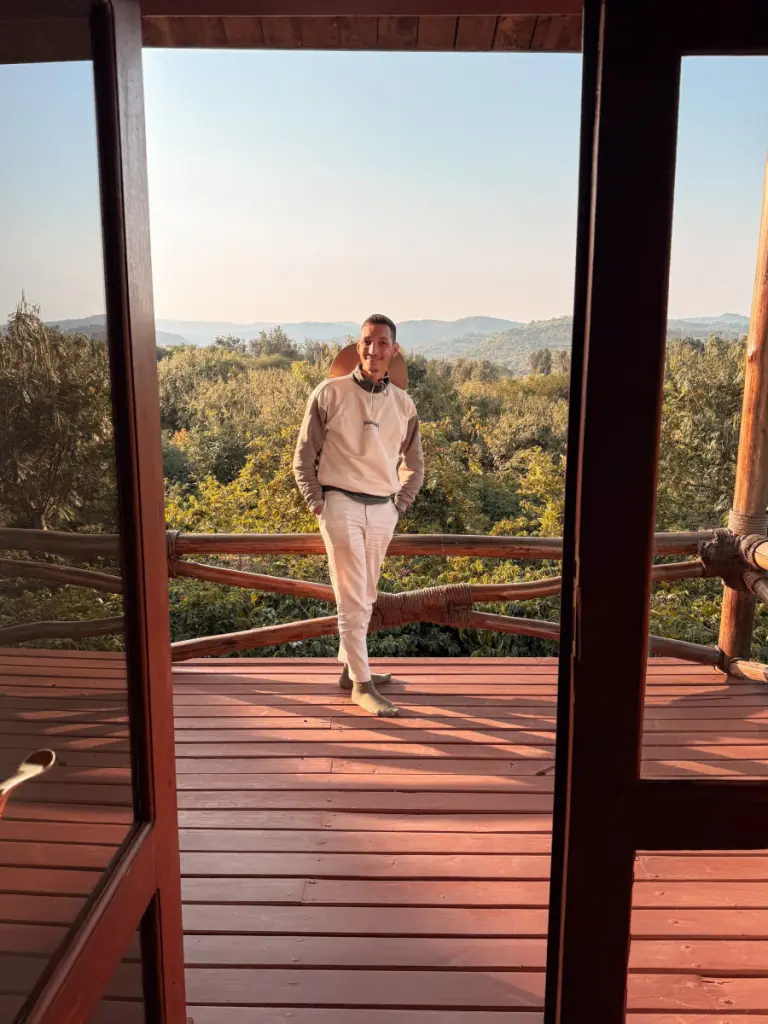
The place is beautiful, with lovely outdoor spaces, a swimming pool and a much more relaxing atmosphere.
The rooms are comfortable, the meals excellent and the whole place really feels like a little haven of peace.
After long hours on the tracks, it was exactly the kind of place we wanted to come back to.
Our only regret: spending just one night there, without really having time to enjoy the facilities.
If you are planning to visit Ngorongoro, it is accommodation we happily recommend.
How do you choose your guide?
We were lucky enough to travel as a couple in a private vehicle with a dedicated guide.
It was a real comfort: we could watch the animals at our own pace, take photos and enjoy our own space.
Our guide was kind, helpful and very respectful. We enjoyed his company and were able to talk with him during the drives.
If we had one regret, it would be his lack of explanations.
He told us the names of the animals, but gave fairly little information about their behaviour, their environment or the history of the parks.
Hearing some guides in other vehicles tell their travellers much more, we understood that this aspect could really enrich a safari.
A good guide shouldn’t only know where to find the animals: they should also help you understand what you are seeing.
It is a criterion we would take more into account for a future trip.
How much should you budget for tips?
It is something we wish we had anticipated better.
In Tanzania, tips play an important role in tourist activities, especially for guides, porters and some accommodation staff.
We sometimes felt a certain insistence around these services, particularly when we simply wanted to carry our suitcases ourselves.
It wasn’t always pleasant, even though we understand that these tips are an important source of extra income for some tourism workers.
Our advice is simple: bring enough cash and above all small notes, in Tanzanian shillings or in dollars where they are accepted.
Also find out before you leave about the customs for tipping the guide and the lodge staff. This lets you set aside a separate budget and avoid being caught off guard.
A tip should remain a way of thanking someone for a service you appreciated, not an obligation at every interaction.
Finally, if you want to photograph local people, especially when meeting Maasai communities, always ask for their consent and clarify in advance whether payment is expected.
What should you pack?
Here is the equipment that seems particularly useful to us after these three days:
- Light clothing that covers you, to protect you from both the sun and insects.
- A warm jacket or a fleece, essential for very early departures, especially on the heights of Ngorongoro.
- A hat or a cap, as well as sun protection.
- An insect repellent suited to the destination.
- Binoculars, to watch the most distant animals. Our guide had a pair, but having several is a real advantage.
- A camera with a telephoto lens, if you enjoy wildlife photography.
- Spare batteries and plenty of storage, because you quickly take far more photos and videos than planned.
- A soft travel bag, more practical for getting around by 4×4 and on some small planes.
For clothing, neutral colours such as beige, khaki and brown are particularly suited to this kind of trip.
How should you organise flights and insurance?
Our experience with the small planes connecting the different regions of Tanzania was rather positive.
The airports are sometimes modest and the planes smaller than the ones we are used to, but the procedures seemed well organised to us and the flight was comfortable.
We even got an ice cream on board, a small detail that amused us after our misadventures with Kenya Airways.
However, our personal impressions should be kept separate from questions of air safety.
Air carriers certified in Tanzania appear on the European Union’s air safety list, notably because of concerns about the oversight of aviation safety. It is important information to check before booking a local flight.
We had also taken out travel insurance with Chapka.
Beyond flights, we think it is essential to have good cover for medical expenses, assistance and repatriation, especially when travelling in regions far from big cities.
Check the terms and exclusions of your policy carefully, especially those concerning air carriers.
0 comments
A question about the place, the route or the budget? Ask it here, I reply to every message.